
13th October 2022
How to tell if your cat is deaf – and how to help
As animal lovers and pet owners ourselves, we know it’s important to ensure that your cat is happy and healthy from day one. But a condition that’s harder to spot than others is deafness in cats. While some cats are born with hearing issues, others can develop issues from injury, illness or old age.
Whatever the reason behind the problems, there are signs owners can look out for to help determine whether their feline friend is struggling with hearing loss. This guide explains how to tell if your cat is deaf, what causes feline deafness, and how to help a cat with hearing problems live a safe and happy life.
In this article:
- Types of deafness in cats
- What are the signs of deafness in cats?
- What are the signs of deafness in kittens?
- Is my cat deaf or just ignoring me?
- Ways to help a cat with hearing loss
- Can deafness in cats be prevented?
- Final thoughts
Types of deafness in cats
There are several types of deafness in cats, and understanding their causes and differences can help you recognise what’s happening with your pet:
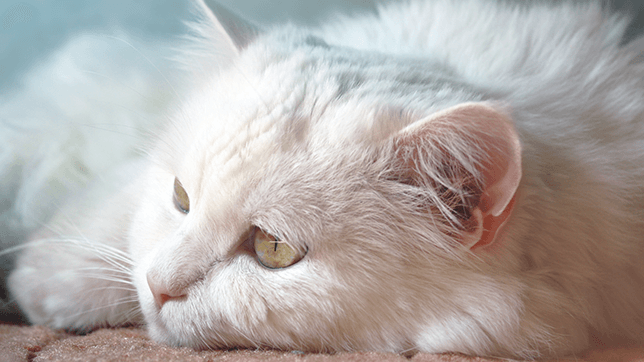
Hereditary deafness: Some cats are born deaf due to genetics. White cats with blue eyes are most likely to be affected, as they carry a gene that suppresses pigment - but can also sometimes limit the development of the inner ear.
Acquired deafness: Hearing loss that develops later in your cat’s life. This can be caused by anything from injury, ear infections, blockages (or tumours), old age, or exposure to loud noises.
Unilateral deafness: This is when a cat is deaf in just one ear. This can be tricky to detect because cats often compensate with their good ear.
Bilateral deafness: This means that both ears are affected. The signs are often easier to notice as your cat will show more obvious changes in behaviour.
What are the signs of deafness in cats?
Although it can sometimes be tricky to tell, there are several signs which can help indicate that your cat might be having trouble hearing. Even if you believe your cat’s ears are working as they should be, it’s always good to be aware of these behaviours for any future problems.
Common signs of a deaf cat include:
- Failing to respond to owners
- Dizziness or disorientation
- Being easily startled by movement
- No longer being afraid of loud noises (like a vacuum cleaner)
- Sleeping longer or more deeply
- Head shaking or pawing at their ears
- Pus or other discharge from the ears
- Unpleasant smell coming from the ears
Some deaf cats may also develop behaviour problems, such as increased vocalisation, confusion, or signs of anxiety when they cannot locate you.
What are the signs of deafness in kittens?
It can be harder to spot deafness in kittens since the signs can be associated with individual quirks or stubborn behaviour. For example, they may ignore you when called but know exactly when the treat bag has been opened!
A good way to tell if your kitten is deaf is to simply watch them as they walk around the house. If they’re not startled by loud noises or don’t respond to common household sounds, it’s likely that your kitten could be deaf.
Is my cat deaf or just ignoring me?
Without looking for other signs and speaking to a veterinary expert it can be hard to tell if your pet is deaf or just being difficult. Here are a few cat deafness tests you can do at home as a first step:
- Clap your hands: Do this when your cat isn’t looking at you. If they don’t react, it could suggest hearing problems.
- Make a sound with toys or keys: Jingle keys or play with a noisy toy behind your cat to see if they respond.
- Call them from another room: See if your cat or kitten reacts to you calling them or making an excited noise.
- Observe their ears: Cats usually swivel their ears towards sounds. If they don’t, this may mean that they can’t hear properly.
Please note: These at-home deafness tests for cats are useful but cannot give a definite diagnosis. A vet may recommend a BAER test (Brainstem Auditory Evoked Response), which measures brain activity in response to sound and is the only way to confirm deafness in cats accurately.
Ways to help a cat with hearing loss
Discovering that your cat might have difficulty hearing can be worrying, but they can still live life to the full as long as you help them every step of the way.
Go to the vets
First things first, if you have any concerns about your cat’s hearing or notice a change in their behaviour, you should speak to your vet as there could be many reasons behind their problems. Getting a diagnosis can help you treat the condition or adapt to life with a deaf cat.
Keep them indoors
If your cat is deaf they won’t be able to hear any potential dangers that could be around them, such as passing cars, so it isn’t safe for them to roam outdoors. If you still want them to enjoy a different space, you could build an outdoor run in your garden with netting overhead, helping keep them safe and stimulated.
Know where they are
Fitting a bell to their collar will help you locate your cat easily if they’re unable to hear you calling. GPS trackers are also available if you want extra reassurance.
Get a hearing friend
Your cat will quickly learn from a hearing friend if they had one! Not only would another cat provide extra company for your cat, but they will also react to your calls first, helping your deaf kitty understand more of the world around them.
Rely on visual cues
Using certain hand motions or gestures for different things will help your cat learn what you want from them. You could also try using a laser pointer to lure them towards their food when it’s dinnertime.
Remember: Don’t point the laser towards their eyes!
Try not to startle
When your cat is sleeping, it’s important to let them know you’re there without scaring them. Gently touch the area around them so that they wake up to the vibrations they feel instead of something sudden and scary.
Remember: If you're beginning to notice that your cat isn't responding as they used to, it’s important to speak to your vet so that they can be properly diagnosed.
Can deafness in cats be prevented?
Unfortunately, many cases of deafness can’t be prevented. Congenital deafness (often seen in white cats with blue eyes) is present from birth, while age-related hearing loss is common in older cats, especially after the age of 10. These changes are usually irreversible.
That said, you can help reduce the risk of acquired deafness by keeping your cat’s ears healthy. Things like reducing your cat’s exposure to loud noise where possible and treating ear infections quickly may all help. Regular vet checks and monitoring your cat’s ear health are the best ways to catch problems early and slow progression of any hearing issues.
Conclusion
Spotting the signs of deafness in cats early can help you make the right changes to keep them safe and happy. While some causes are temporary and treatable, others - like congenital or age-related hearing loss - are permanent.
The good news is that a deaf cat can still live a full and joyful life with the right support.
For more support and feline care tips, explore more of our Cat Advice content below.
Related resources
Ear infections in cats
Basic first aid in cats
All cat health advice

Looking for more cat advice?
We’ve written some handy cat advice guides, to help you unlock the secrets of your mysterious moggy.

Need cat insurance?
Cat insurance can help cover the cost of veterinary treatment if your cat gets injured or falls ill.
We know pets
Here at Animal Friends Insurance, we're multi-award winning, with a passion to create a better life for every animal.
Since we were founded over 25 years ago, we protect the nation’s pets, while also making a difference to animal welfare and our planet. Thanks to you, we've donated over £10 million to more than 830 animal welfare charities and conservancies, helping to support vulnerable pets and wildlife around the world.
We’re proud to offer pet insurance that helps make a difference to the lives of animals everywhere.
The charitable work undertaken by Animal Friends Insurance is not regulated by the Financial Conduct Authority.