
13th October 2022
How to tell if your dog is deaf - and how to help
All dog owners want to make sure their pooch stays happy and healthy throughout their lives, but one ailment that can often go undetected in our dogs is hearing loss.
Some dogs are born deaf while others lose their hearing from injury, illness or old age. Regardless of the reason, owners need to watch out for several signs that might mean their canine companion is struggling with hearing issues.
Whatever the cause, it’s important for owners to recognise the signs of deafness in dogs early so they can support their canine companion and help them live a safe, happy life.
In this article:
- Types of deafness in dogs
- What are the signs of deafness in dogs?
- Causes of hearing loss in dogs
- Ways to help a dog with hearing loss
- Final thoughts
Types of deafness in dogs
There are three types of deafness that canines can suffer from. These are as follows:
- Congenital Deafness: This occurs as a result of the deterioration of sensory inner ear structures in either one or both ears within a few weeks of a puppy’s birth. It is a hereditary condition and studies show that if just one of the parents is deaf then the chance of the pup being deaf doubles.
- Unilateral Deafness: When a dog is aurally impaired or completely deaf in one ear. This is more difficult to detect, as dogs often compensate for their bad hearing by using their good ear.
- Bilateral Deafness: When both of a dog’s ears experience hearing difficulties or are both completely deaf. Signs of bilateral deafness are usually easier to spot.
What are the signs of deafness in dogs?
It can be difficult to spot symptoms of deafness in dogs. This is because they rely on smell and vibrations a lot more than we do. A dog may have been deaf for an elongated period of time before the owner even notices.
Despite this, there are several signs that could indicate your dog may be struggling to hear as well as they once did. These include:
- Changes in obedience.
- Becoming unresponsive to noises they usually react to (doorbell, hoover, etc.).
- Excessive barking.
- Failing to respond when called.
- Difficult to wake up from sleep.
- Shaking or tilting their head.
- Pus or discharge from the ear.
- An unpleasant smell coming from the ear.
What are the signs of deafness in puppies?
It can be harder to determine deafness in puppies while you are still learning about your pup and their unique behaviours. Puppies can be especially stubborn and un-cooperative, so they can show some of the signs of hearing loss listed above without actually being deaf.
However, there are a couple of simple tests you can perform at home so that you can tell your vet about any concerns you might have about their hearing.
How to test your dog’s hearing at home
Here are a few simple ways to check if your dog is going deaf before visiting the vet.
Observe your pet
Simply watch your dog or puppy as they walk around the house. If they don’t turn their ears toward a sound to help determine its cause, your pup could be struggling with their hearing.
Play with noisy toys
While your pooch is resting, shake some keys or play with a squeaky toy away from their view to see if they come running to the sound. A deaf dog tends not to react to "exciting" sounds or voices.
Clap your hands
Clapping your hands is a great way to detect deafness in your dog, but it’s best to do it whilst standing further away.
Because dogs rely on air movement and vibrations to detect any sounds around them, they may be able to pick up on air movement and in turn, respond to your clapping.
This can lead you to believe that your dog isn’t deaf, so clapping your hands whilst at a fair distance from your pet can help to eliminate the chances of them responding to changes in the air.
Ring the doorbell
Dogs are smart animals and when you leave a room to test their hearing, their senses will be heightened. This may not give you an accurate picture of your dogs’ auditory health, so try getting somebody else to make a noise unexpectedly.
A great way to try this is to organise somebody to ring the doorbell from outside when the dog is sleeping, eating or roaming the house. A response from them when it’s unexpected can mean that they aren’t suffering from deafness.
Important: Home hearing tests are helpful and cost-effective, but they can only give you an indication whether your dog has hearing loss, and can’t always show if your dog has bilateral or unilateral deafness. Your vet will conduct their own tests following your concerns and any evidence you’ve collected, which may include a BAER test.
BAER tests
The BAER test is the only definitive way to give you the exact status on the health of your dog’s ears.
The test, which stands for Brainstem Auditory Evoked Response, records the electrical activity in a dog’s brain in response to sound simulation and can help to identify any hearing problems your pet may be experiencing.
Due to a puppy’s ear canal only opening at 2 weeks old, the BAER test can only be performed on dogs over the age of 6 weeks.
Although the test is not painful for your pet, they may struggle with keeping the equipment on. It can also be expensive which is why some owners try the home tests first before deciding to get professional help.
However, it’s the only way to effectively test for unilateral deafness in dogs, which is where the home methods are limited.
Causes of hearing loss in dogs
Deafness in dogs can be:
- Age-related (presbycusis): common in senior dogs.
- Infectious or inflammatory: ear infections (otitis externa, media, interna) can cause temporary or permanent deafness.
- Trauma or injury-related: damage to the eardrum or inner ear.
- Noise-induced hearing loss: long-term exposure to gunshots, fireworks, or very loud environments.
- Drug toxicity (ototoxicity): certain medications (e.g. some antibiotics, chemotherapy drugs, NSAIDs) can damage hearing.
- Tumours or systemic illness: thyroid disease, Cushing’s, or cancers affecting the ear or brain.
- Blockages: wax build-up, foreign objects, or growths in the ear canal.
Always contact your vet if you suspect that your dog is losing their hearing so that they can diagnose or rule out any health problems.
Is my dog more prone to deafness?
According to the MSD Vet Manual, more than 100 dog breeds carry genes linked to deafness. Breeds at higher risk include:
- Dalmatians
- English Setters
- Australian Cattle Dogs
- Bull Terriers
- Boston Terriers
- Cocker Spaniels
- Parson Russell Terriers
- Dogo Argentinos
- Catahoula Leopard Dogs
Dogs with white coats, blue eyes, or merle colouring are genetically more likely to experience congenital deafness. For owners, the important takeaway is that some breeds carry much higher genetic risk, so if your pup is from one of these breeds, regular vet check-ups and, in some cases, BAER testing are recommended to confirm hearing status.
Important: Dogs with hereditary deafness should not be bred, as passing on the condition can affect the welfare of future generations. Responsible breeders use BAER testing to screen litters.
Why has my dog suddenly gone deaf?
Sudden deafness in dogs is usually caused by an underlying medical issue rather than ageing. While some cases may be temporary and treatable, others can be permanent. If your dog seems to have lost their hearing very quickly, it’s best to speak to your vet as soon as possible so they can identify the cause and advise on the right treatment.
Ways to help a dog with hearing loss
Discovering that your dog has hearing difficulties can be worrying, but they can still live a full and happy life as long as you help them every step of the way.
Go to the vets
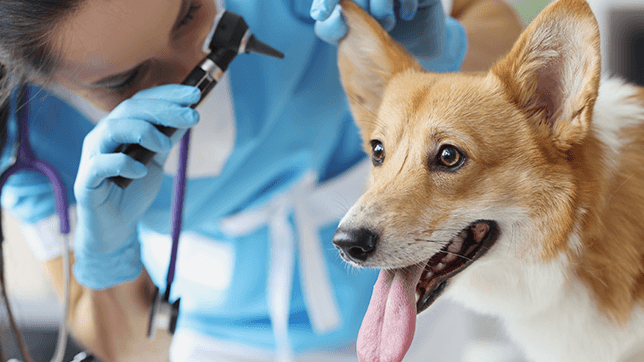
If you’re concerned about your dog’s hearing or notice a change in their behaviour, it’s important you take them to your vet for a check-up as it could be something as simple as an ear infection that’s causing temporary deafness.
Keep them safe
If your dog is deaf, they won’t be able to hear any potential dangers that could be around them, such as passing cars or other animals. Keeping your dog on a lead during walks will help them stay safe as you’ll be able to help them navigate their surroundings.
Teach hand signals and touch cues
Dogs with hearing loss can adapt quickly to visual and tactile communication. Start by designating a clear hand signal for each behaviour (such as sit, lie down, or stay) and reward your dog with treats or praise each time they respond correctly. Over time, they’ll associate the signal with the behaviour, just like a hearing dog would.
You can also use touch cues to get your pet’s attention, such as a gentle tap on the shoulder or back before giving a hand signal. Some owners find that combining hand gestures with other cues - like flashing a light or stamping a foot for vibrations - helps reinforce training.
Use a vibration collar to communicate
Vibrating collars can help you to get your deaf dog’s attention when they can’t see you. The gentle vibration is controlled by you and can be paired with hand signals and treats so your dog learns it means ‘look at me’. Always introduce it positively and stop if your dog seems stressed, as some adapt well while others prefer visual or touch cues instead.
Shock collars should never be used to get your dog’s attention, because they cause fear, pain, and stress, which can damage your bond and lead to anxiety or aggressive behaviours.
Know where they are
Certain pet trackers can be fitted onto your dog’s collar so that you can know where they are at all times. Some GPS tracker collars have apps that let you monitor their location in real-time for added reassurance.
You can even use an old school method and tie a bell to their collar so you can hear them better around your home and garden.
Try not to startle them
When your dog is sleeping, it’s important that you approach them from the front to avoid startling them. If they’re lying on the floor, stamping your feet can help announce your arrival as they’ll be able to feel the vibrations, or you switch the lights on and off to let them know you’re around.
Stay patient
Training a dog that’s lost their hearing takes time and consistency. Whether your dog was born deaf, lost hearing suddenly, or is experiencing age-related decline, they may need longer to adjust to new cues. Senior dogs may also face sight loss, so using touch, vibration, and scent cues alongside hand signals can help. Keep sessions short, positive, and rewarding to build their confidence and strengthen your bond.
Final thoughts
Spotting the signs of deafness in dogs early is the best way to keep your pet safe, supported, and happy. While some causes of hearing loss in dogs are temporary and treatable, others - such as congenital or age-related deafness - are permanent. The good news is that your pet can still live a fulfilling, joyful life with the right care.
If you ever notice your dog’s hearing changing, you should always get in touch with your vet for a proper diagnosis and guidance on the next steps.
Explore more pet health resources for dog owners to keep your pooch healthy and happy:
Related resources
How to spot early signs of illness in dogs
All dog health advice
All dog training and behaviour advice

Need dog insurance?
Dog insurance can help cover the cost of veterinary treatment if your dog gets injured or falls ill.
Looking for more dog advice?
Find the information you need as we support you through every step of your journey with your canine companion.
We know pets
Here at Animal Friends Insurance, we're multi-award winning, with a passion to create a better life for every animal.
Since we were founded over 25 years ago, we protect the nation’s pets, while also making a difference to animal welfare and our planet. Thanks to you, we've donated over £10 million to more than 830 animal welfare charities and conservancies, helping to support vulnerable pets and wildlife around the world.
We’re proud to offer pet insurance that helps make a difference to the lives of animals everywhere.
The charitable work undertaken by Animal Friends Insurance is not regulated by the Financial Conduct Authority.