
The Dangerous Wild Animals Act 1976 - Fifty Years On
We stand with our friends at Born Free Foundation as they call for critical change from the government to change legislation.
Keeping Wild Animals as Pets: Why Change is Needed
Fifty years after Britain introduced legislation to regulate the private ownership of dangerous wild animals, new research published in July 2026 from international wildlife charity Born Free has revealed the scale of a growing concern.
The findings show that thousands of dangerous, non-native wild animals are still being kept as "pets" in private homes across the country, raising important questions about animal welfare, public safety, and whether current laws are fit for purpose.
Sign the petition
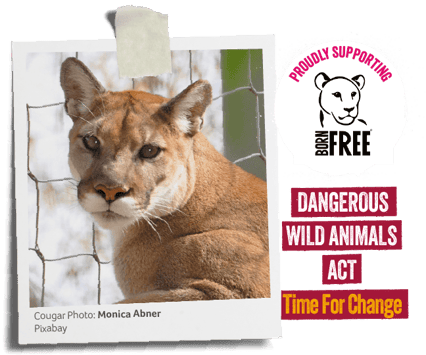
Born Free is calling on the UK government to undertake a comprehensive review of wild animal trade and ownership, including the current dangerous wild animal legislation.
The trade in and keeping of wild animals as pets threatens vulnerable wild populations, risks public and environmental safety, and seriously compromises animal welfare - if you agree, please sign the petition.
What is the Dangerous Wild Animals Act 1976?
The Dangerous Wild Animals Act 1976 (DWAA) requires anyone wishing to keep certain wild animals such as big cats, venomous snakes and some primates, to obtain a licence from their local authority.
When the DWAA was introduced, it was designed to protect the public from the risks associated with keeping dangerous species in private ownership. Nearly 50 years later, however, the world of pet ownership has changed dramatically and many conservation and animal welfare organisations believe the legislation has failed to keep pace.
The legislation was introduced to ensure that dangerous animals were kept securely and that the public would not be placed at unnecessary risk. Local authorities are responsible for inspecting premises and issuing licences where appropriate.
However, while the Act focuses heavily on public safety, it gives far less consideration to the welfare of the animals themselves.
Among the most vocal advocates for reform is one of the trusted charities we support, Born Free Foundation, which argues that the Act is now outdated, inconsistent, and no longer provides adequate protection for either animals or the public.
An Act That Hasn't Kept Up With Modern Wild Pet Ownership
Since 1976, the popularity of wild pets has grown significantly. Today, thousands of wild animals are legally kept in private collections across Great Britain.
Research published by the Born Free Foundation in July 2026 found that:
- More than 2,200 dangerous wild animals licensed or in application for private ownership
- This includes more than 500 venomous snakes, nearly 300 dangerous primates, 78 crocodilians and 166 wild cats
- Over ten times more deadly venomous snakes kept in British homes than in zoos
While these figures may sound surprising, they only tell part of the story. Many wild species that require highly specialised care—or may still present welfare or safety concerns are not covered by the legislation at all.
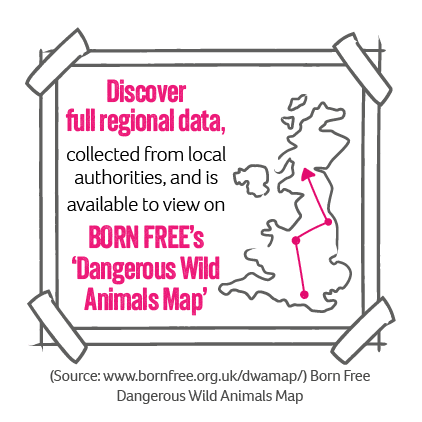
The full regional data, collected from local authorities, is available to view on Born Free’s ‘Dangerous Wild Animals Map’. Anyone can log-on and see if there is a dangerous wild animal, such as a lion, alligator or venomous reptile, living near them.
What changes do we want?
Rather than making minor amendments, we stand with Born Free and other Non-Governmental Organisations (NGO’s) to call for a comprehensive review of the regulation of wild animals kept as pets in the UK.
We believe any updated legislation should assess whether private ownership is appropriate based on a much broader set of criteria, including:
- Whether an animal's physical, behavioural and psychological welfare needs can realistically be met
- Whether owners possess the necessary qualifications, knowledge and experience
- Whether the trade could negatively affect wild populations or species conservation
- Whether there are environmental risks, including escaped invasive species
- Whether there are risks to public health, animal health and biosecurity, including zoonotic diseases (illnesses that can jump from animals to humans)
- Whether keeping a particular species in a domestic setting can ever be justified from an animal welfare perspective
This represents a significant shift away from regulating animals solely according to how dangerous they are to people.
Kirsty Gallacher, Broadcaster & Born Free Patron said “It is staggering and deeply troubling that in 2026, dangerous wild animals are still being legally kept behind closed doors in Britain. Big cats, crocodiles, venomous snakes and primates are not pets, they are wild creatures that suffer greatly in captivity. Keeping them in private hands puts both people and the animals at risk. This should not be normal, and it should not still be legal. Fifty years on, these animals are still wild, still dangerous, and still being failed by the law. The government must urgently review this outdated legislation and ultimately bring an end to the private keeping of wild animals as pets.
The Future of the Dangerous Wild Animals Act
Nearly five decades after it became law, the Dangerous Wild Animals Act remains an important piece of legislation. However, growing evidence suggests it no longer reflects the realities of modern exotic pet ownership.
Wild animals are inherently unsuited to life as pets, yet many are kept in UK homes in conditions that fail to meet their complex welfare needs, with a growing trade and weak oversight. We call for urgent review and reform of laws on the keeping and trade of wild animals as pets.
The current legal framework is fragmented and outdated, failing to protect animal welfare, biodiversity and public health. Online trade and weak regulation are driving growth in the wild pet trade. We stand with Born Free to call on the Government to review and reform laws in England and Wales, introducing evidence-based measures to prevent harm, close loopholes, strengthen enforcement and meet UK commitments to animal welfare, biosecurity, conservation and public health.
Campaigns we support
We are using our voice, our business and our community to help protect the future for animals everywhere. Explore our campaigning stories.
Save animals with us
We’re on a mission to create a better life for every animal. We believe that all animals deserve the right to be protected and to live happy and healthy lives.
Policies with purpose
We were founded in 1998 to help support animals in need. Providing policies that aim to protect your pet, and our commitment to have a positive impact on animal welfare.