
1st July 2026
A complete guide to microchipping your cat
Created in partnership with Joii Pet Care Experts
Despite our best efforts, and while we might think that cats will always find their way home, it is not uncommon for our feline friends to get lost or even stolen. Should this happen, a microchip gives them the best chance of being identified and returned to you.
What is a microchip?
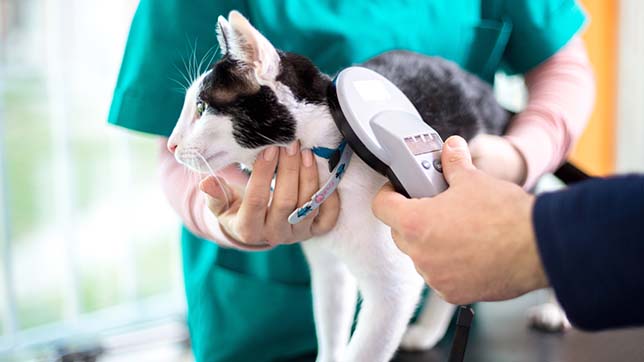
A microchip for cats is a Radio Frequency Identification Device (RFID), approximately the size of a grain of rice. It is inserted under the skin between the shoulder blades using a sterile needle applicator by a veterinarian or a suitably trained professional.
When a microchip is scanned, it activates a unique identification number that links your cat to your contact details. This ensures your cat can be safely returned if lost or stolen.
How much does microchipping a cat cost in the UK?
In the UK, the cost of microchipping your cat typically ranges between £10 and £30, depending on your location. This service can be provided by any qualified implanter, including vets and authorised organisations.
What’s the cost of not microchipping your cat?
Failing to microchip your cat can have consequences. Since 2024, cats must be microchipped by 20 weeks, and unregistered cats may be reported if lost. Without a microchip, the chance of recovering a lost or stolen cat is significantly reduced.
How much does it cost to update your contact details?
Updating your cat’s microchip details may be free, but some databases charge a small fee. Providers vary in their policies, so it’s important to check with your chosen database.
Keeping your details up to date ensures you can be contacted quickly if your cat goes missing. You can check and update your registration using Check-a-Chip.
Why should I get my cat microchipped?
From 2024, it became a mandatory requirement for cats to be microchipped by the time they are 20 weeks old in the UK.
Michaela, vet at Joii Pet Care, says:
“Even indoor cats should be microchipped. Cats are naturally curious and can escape in unexpected ways. An indoor cat is less familiar with the outdoors and more likely to become lost and frightened.”
Microchipping provides peace of mind. While collars and ID tags are useful, they can be lost, removed, or damaged. A microchip is permanent and increases the chance of a reunion. It also helps combat pet theft — if your cat is reported missing, attempts to re-register the chip will notify you immediately.
When should I microchip my kitten?
You should microchip kittens as early as 8 weeks old, ideally before their first outing. Microchipping early ensures your kitten is protected from the start and all ownership details are correctly registered.
What happens when I get my cat microchipped?
The procedure involves inserting a chip under the skin between the shoulder blades using a syringe. The process is quick and painless, similar to a routine vaccination.
Joii Vet Expert adds:
“Placement of a microchip is generally no more painful than a routine vaccination. Although the needle may look alarming, it rarely causes a pain reaction, and the materials used do not cause tissue reactions.”
Once inserted, the microchip lasts your cat’s lifetime and only needs to be done once.
Is my cat already microchipped?
If you’re unsure whether your cat is already microchipped, they can be scanned by a vet, rescue centre, or organisation which is likely to encounter stray animals. This will be done with a hand-held scanner and if it detects a microchip, the scanner will display its unique number.
Once you have their unique microchip number, you can use a chip checker online to find out who they're registered with so that you can check or update your details. If your pet's microchip number doesn't bring up a database, you might have registered with a database that's not DEFRA compliant.
A list of government approved databases
- Animal Microchips
- Animal Tracker
- Chipworks
- Identibase
- MicroChip Central
- My Animal Trace
- MyPet
- National Veterinary Data Service
- Pet Chip Register
- Pet Database – FREE TO USE
- Pet Identity UK
- Petlog
- PetScanner
- ProtectedPet
- SmartTrace
- UK PETtrac MicroChip Database
- We Trace Pets
Animal Friends and your cat’s microchip
As a leading UK pet insurance provider, Animal Friends supports responsible pet ownership. You can add your cat’s details to your cat insurance policy, keeping them handy if you ever need them.
How to add your cat’s microchip details to your policy?
Cat microchipping FAQs
A microchip provides a permanent form of identification for your cat, which can help ensure they are returned if lost or stolen. Microchips can also be used to activate cat flaps and feeders, providing added convenience.
No. Microchips are not GPS devices and cannot show your cat’s real-time location. They are only used for identification and linking your cat to your contact details.
Occasionally, microchips may migrate or stop working. It is recommended to ask your vet to scan your cat annually during routine health checks to ensure the microchip is functioning correctly.
If you’re buying or adopting a cat in England, it’s now a legal requirement for cats over 20 weeks old to be microchipped before ownership can be transferred. Not having your cat microchipped could lead to a fine of up to £500.
Even though this law currently applies only in England, responsible shelters and breeders across Scotland, Wales, and Northern Ireland still make microchipping standard practice.
Always ask for proof that your new cat is microchipped, and make sure you update the microchip database with your contact details as soon as you take them home. This simple step gives your new feline friend the best chance of being returned safely if they ever get lost.
Michaela, an expert vet at Joii Pet Care, says:
“It is just as important to microchip indoor cats as it is outdoor ones. Cats are naturally curious, and indoor cats can escape in unexpected ways. They are less familiar with the outdoors and more likely to get lost and frightened.”
Related articles:
Let us look after your cat's details
Your cat's details can be added to your policy in our Customer Hub so that you have them to hand should you ever need them.

Looking for more cat advice?
We’ve written some handy cat advice guides, to help you unlock the secrets of your mysterious moggy.
Need cat insurance?
Cat insurance can help cover the cost of veterinary treatment if your cat gets injured or falls ill.
We know pets
Here at Animal Friends Insurance, we're multi-award winning, with a passion to create a better life for every animal.
Since we were founded over 25 years ago, we protect the nation’s pets, while also making a difference to animal welfare and our planet. Thanks to you, we've donated over £10 million to more than 830 animal welfare charities and conservancies, helping to support vulnerable pets and wildlife around the world.
We’re proud to offer pet insurance that helps make a difference to the lives of animals everywhere.
The charitable work undertaken by Animal Friends Insurance is not regulated by the Financial Conduct Authority.