
27th January 2026
How to clean your cat’s teeth
Just like us, our cats need healthy teeth and gums to stay happy and well. Brushing your cat’s teeth regularly helps prevent plaque, tartar, and painful gum disease - all of which can lead to serious health issues if left untreated.
In this guide, we’ll cover how to brush a cat's teeth, tips for keeping their mouth clean without brushing, and when to ask your vet for advice.
In this article:
- Why should I brush my cat’s teeth?
- What you need before you start brushing your cat’s teeth
- How to brush your cat’s teeth
- When to see your vet
- Keeping your cat’s smile healthy
Why should I brush my cat’s teeth?
Cleaning your cat’s teeth helps to prevent dental problems before they start. Bacteria, saliva and food particles stick to your cat’s teeth and form a film called plaque which collects in the cracks and crevices of their mouth and on the gums. If this film is left undisturbed and not brushed away, it rapidly forms rock-like brown mineral deposits known as tartar. This causes inflammation (gingivitis), bad breath, and eventually periodontal disease - a painful condition that affects between 50-80% of cats over four years old.
Untreated dental disease doesn’t just cause mouth pain or dental complications, it can even lead to other infections that can affect your cat’s internal organs. That’s why making dental care a part of your cat’s regular routine is so important.
When should you start cleaning your cat’s teeth?
If you have a kitten, it’s best to start brushing their teeth as soon as you can. This will allow them to get used to it from a young age, helping keep their teeth gleaming as they grow.
If your cat is older, booking them in for a dental assessment with your vet first can help make sure any existing problems are treated before you start regularly brushing their teeth, potentially causing them more pain (if there are existing problems.)
How often should I brush my cat’s teeth?
Ideally, you should brush your cat’s teeth once a day. Daily brushing removes plaque before it turns into tartar and helps your cat get used to the routine.
Brushing at the same time every day is recommended so your cat knows what to expect. Whether you do this in the evenings when they’re calm and quiet, or before their dinner so they know they’ll be ‘rewarded’ with food afterward - consistency is key.
If daily brushing feels like a struggle, aim to clean your cat’s teeth at least 2-3 times a week.
What you need before you start brushing your cat’s teeth
Before you start cleaning your cats’ teeth, make sure you have the right tools:
- A toothbrush that’s the right size for your cat’s teeth.
- Toothpaste suitable for cats (other types might be harmful).
- A reward ready for when you’re finished.
- A relaxed and calming environment so that your cat will feel at ease.
If you’re unsure what products to buy, look for those approved by the Veterinary Oral Health Council (VOHC).
How to brush your cat’s teeth
Brushing your cat’s teeth takes patience and practice, but it gets easier with time. Here’s how to get started:
- Ease them in: Gently stroke your cat’s cheeks to get them used to having their mouth touched.
- Introduce the taste of toothpaste: Let your cat lick a bit of flavoured cat toothpaste off your finger.
- Finger brushing: Rub a pea-sized amount of toothpaste onto your cat’s upper teeth and gums with your finger or a cotton bud.
- Try the toothbrush: When your cat is comfortable, use a toothbrush to clean a few teeth in gentle, circular motions. Focus on the outer surfaces where plaque builds up most.
- Take it slow: Gradually increase the brushing area and time (start with 10 seconds per side, working up to 30).
- Reward them: End each session with a treat, a toy, a cuddle, or a quick play session.
Top tip: Position your cat with their back towards you. It’s less intimidating and gives you better control. Always wash your hands before and after handling your pet’s mouth.
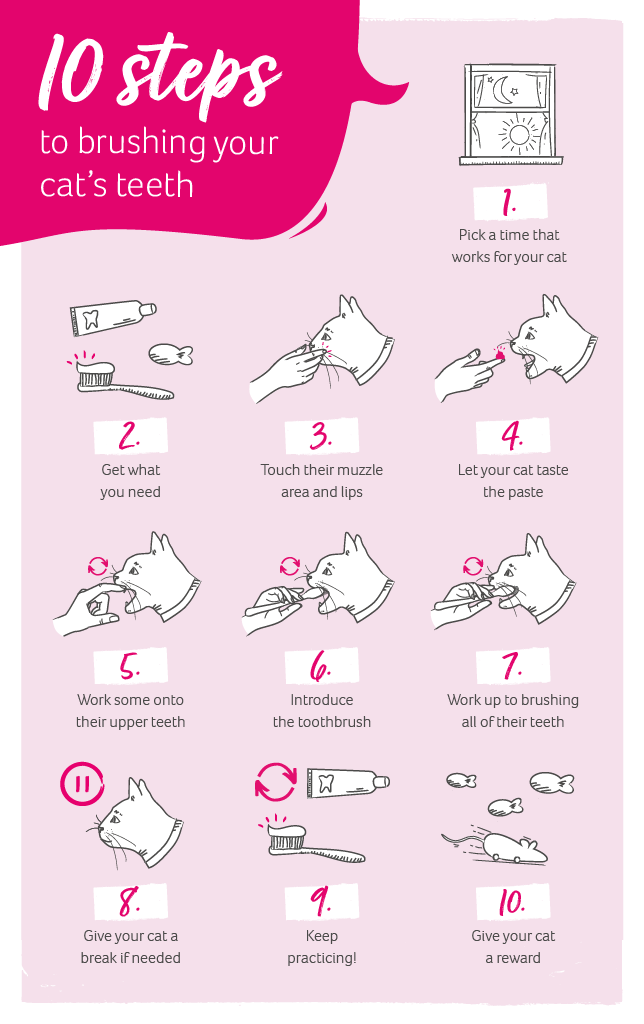
Remember: Only move onto the next step in the technique sequence once your cat consistently tolerates you doing the one before. This can sometimes take weeks to master so work slowly. Routine and repetition are important so making sure you do this each day will help your pet know what to expect.
How to keep your cat’s teeth clean without brushing
While not as effective at removing plaque, certain alternatives to brushing your cat’s teeth can help to maintain their oral hygiene:
- Dental diets: Some kibbles are designed to scrub teeth while your cat chews.
- Cat dental sticks and treats: These can help reduce plaque build-up and freshen breath.
- Oral gels or water additives: These can reduce bacteria and plaque when brushing isn’t possible.
- Toys and textured chews: Cat toys filled with catnip to encourage chewing can help keep their teeth clean.
Always check with your vet before trying new dental products, since their effectiveness can vary quite a lot, and not every option suits every cat.
When to see your vet
Even with the best home routine, your cat will still need regular veterinary dental checks. Book a vet appointment at least once a year as part of their routine health exam, or sooner if you’re struggling to brush your cat’s teeth or spot any signs of dental problems.
Contact your vet if you notice:
- Bad breath
- Drooling or difficulty eating
- Bleeding or red gums
- Loose, broken, or missing teeth
- Yellow or brown tartar build-up
- Pawing at the mouth or changes in behaviour
Your vet can assess your cat’s mouth and may recommend:
- A professional dental clean under anaesthetic to remove plaque and tartar
- X-rays to check for hidden conditions such as tooth resorption (common in cats)
- Advice on ongoing home care to prevent problems returning
Keeping your cat’s smile healthy
Cleaning your cat’s teeth might feel tricky at first, but it’s one of the best ways to protect their long-term health. With patience, consistency, and the right tools, you’ll soon have a confident kitty who tolerates brushing like a pro.
For more advice on taking care of your feline friend, visit our Cat Advice hub or check out some of our related cat health guides below.
Related content

Looking for more cat advice?
We’ve written some handy cat advice guides, to help you unlock the secrets of your mysterious moggy.

Need cat insurance?
Cat insurance can help cover the cost of veterinary treatment if your cat gets injured or falls ill.
We know pets
Here at Animal Friends Insurance, we're multi-award winning, with a passion to create a better life for every animal.
Since we were founded over 25 years ago, we protect the nation’s pets, while also making a difference to animal welfare and our planet. Thanks to you, we've donated over £10 million to more than 830 animal welfare charities and conservancies, helping to support vulnerable pets and wildlife around the world.
We’re proud to offer pet insurance that helps make a difference to the lives of animals everywhere.
The charitable work undertaken by Animal Friends Insurance is not regulated by the Financial Conduct Authority.