
27th May 2026
Cockapoo breed guide
If you’re searching for a canine companion who’s active, friendly, and loves to have fun, then look no further than the endearing Cockapoo!
Read our guide to find out more about the enchanting Cockapoo breed.
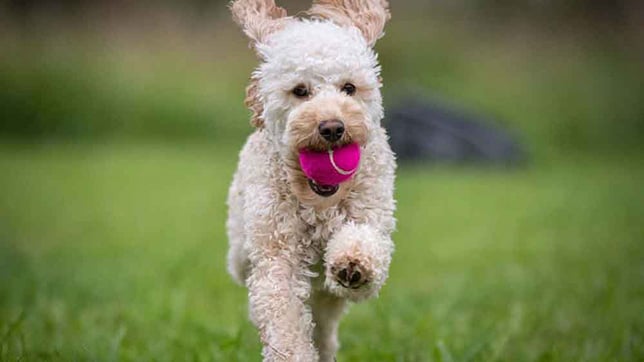
Cockapoo overview
| Size | Small/Medium - 5-11kg |
| Lifespan | 12-15 years |
| Exercise needs | Medium - 1 or 2 hours daily |
| Grooming needs | Moderate - grooming required every 2-3 days |
| Suitable for | Families and households with other pets. Easy to train and very sociable. |
| Outdoor space | Needs access to a garden, but can adapt to most living environments |
| Common health issues | Ear infections, Hip issues |
| Personality | Friendly, social, intelligent |
How much does it cost to look after a Cockapoo?
Dogs can invite endless amounts of joy to their pet parents’ lives, through their loyalty and the companionship they provide. However, being a pet parent also requires a significant financial investment, alongside the time and effort we devote to caring for our dogs every day.
As a general guideline, it’s estimated that caring for a Cockapoo could cost upwards of £80 a month.
The minimum costs of owning a cockapoo will vary considerably based on a huge variety of different factors. Just a few of those factors include (but are not limited to) availability of pet products and services where you live, your cockapoo’s overall health, and local veterinary costs.
To give you an idea of the care, products, and services you’re likely going to have to pay for when you own a cockapoo, here’s a very basic list:
- Everyday essentials such as food, dishes, dog bed, bedding, collar with ID tags, harness, lead, toys, treats, poo bags, first aid kit, travelling equipment, and dental products.
- Coat care items including, brushes, dog-safe shampoo, nail clippers plus regular appointments with a professional dog groomer.
- Initial veterinary costs for microchipping, spaying or neutering and first vaccinations.
- Ongoing preventative care such as annual vaccinations, flea and worming treatment and annual health checks.
- Other costs like pet sitting when you go on holiday, doggy daycare while you’re at work and Cockapoo insurance to protect against unexpected vet care costs.
Cockapoo generation categorisation
To help pet parents understand their Cockapoo’s ancestry, a system has been set up that describes how a Cockapoo has been crossed, as follows:
- F1 Cockapoo are ‘first generation’ Cockapoos who are a cross between a cocker spaniel and a poodle.
- F2 Cockapoo are ‘second generation’ Cockapoos whose parents are both ‘F1’ Cockapoos
- F3 Cockapoo are ‘third generation’ Cockapoos whose parents are both ‘F2’ Cockapoos.
- F4-F7 Cockapoos are named for each subsequent generation of Cockapoos.
If the letter ‘b’ is added to the relevant ‘F’ code above, that means a Cockapoo has been bred with either a cocker spaniel or a poodle. For example, if an F1 Cockapoo bred with a cocker spaniel, their puppies would be ‘F1b’ – and if an F2 Cockapoo bred with a poodle, their puppies would be ‘F2b’.
Should two Cockapoos of different generations produce a litter of puppies, those puppies can only be considered one generation up from the parent with the lowest ‘F’ number. For instance, breeding an F1 and an F2 Cockapoo would produce puppies considered to be ‘F2’ – though F1 and F3 Cockapoos would also produce a litter of ‘F2’ puppies.
Common characteristics of the Cockapoo breed
Please remember that the following characteristics are considered ‘average’ for Cockapoos, and since each dog is a unique individual, your Cockapoo’s characteristics may differ.
How big are Cockapoos?
On average, a Cockapoo measures in at 25-40cm in height at the shoulder – which largely depends on the height of their parents.
How much do Cockapoos weigh?
A Cockapoo’s weight depends on their overall size, diet, and activity levels, though they usually weigh approximately 5-11kg.
How long do Cockapoos live?
Generally, Cockapoos are known to live for around 12-15 years.
Typical Cockapoo appearance
Owing to the variety of genetics involved in developing the Cockapoo breed (more on this later!), their appearance isn’t necessarily considered ‘standard’ – as would normally be expected for pedigree breeds. So, it’s worth noting that your Cockapoo’s appearance may differ from the description given here…
The Cockapoo’s curious eyes are framed by layers of curly hair, whereas their muzzle often presents a permanently ‘happy’ expression resembling that of the ever-cheerful cocker spaniel.
While their body shape tends to be compact, the Cockapoo is fairly tall in comparison to their body size, with relatively long legs that are ‘pawfect’ for adventuring!
Thanks to their poodle ancestry, the Cockapoo benefits from a long coat that’s more likely to be curly than wavy. Although Cockapoos don’t moult as much as other longhaired dog breeds, their coat still requires frequent grooming to stay in tip top condition.
In terms of the coat colours usually seen in the Cockapoo breed, they can be:
- Golden or cream
- Apricot (a golden-orange colour).
- Red (orange-brown).
- Brown or chocolate.
- Black.
- Black and tan (pale brown).
- Black and white.
- White.
- Sable (hair with pale roots and darker ends).
- Blue merle (pale grey base with darker mottled/dappled patches).
- Tri-colour (black, white, and tan).
Plus, Cockapoos can have an array of different markings, from white patches to any coat colour in a roan pattern (mottled white over a base coat colour).
Typical Cockapoo temperament
Cockapoos are the adorable teddy bears of the dog world! Not only do they enjoy snuggling up on the sofa, but they also love nothing more than to join you on all your adventures.
Whether you’re going to the beach, hiking, or exploring somewhere new, your Cockapoo will want to be with you – they may suffer from separation anxiety if left alone.
Being so good natured and friendly, Cockapoos often thrive as part of an active family. However, it’s important they’re introduced safely to other pets and children, since Cockapoos are known to become excitable at times and need ample positive reinforcement to learn to stay calm.
Since they’re so intelligent, Cockapoos are fantastic to train – though keep in mind that due to being a crossbreed, their traits aren’t as predictable as those of pedigree dogs.
As a high-energy breed, the Cockapoo requires at least an hour or two of exercise daily, alongside mental stimulation activities to keep them busy throughout the day. Cockapoos are also excellent at sports, such as agility, that test their athleticism and intelligence.
Cockapoo health conditions
It’s not unusual for dogs to be prone to certain health concerns depending on the health of their parents, and Cockapoos are no exception. Here are a few health conditions commonly seen in the Cockapoo:
- Ear infections.
- Hip dysplasia.
- Eye problems (like conjunctivitis).
For further information about some of the common conditions experienced by Cockapoos, please visit our Cockapoo health problems article.
Remember: Keep an eye out for any health issues your Cockapoo may develop, and get your canine companion checked by a vet if you have any concerns. If you are considering pet insurance, be sure to read our guide about insuring your Cockapoo.
For cockapoos, ear problems can be common – which is why you may need to care for your dog’s ears by cleaning them.
Please note: It’s essential to follow veterinary recommendations for the best ear cleaning products to use, and your vet will let you know how often your cockapoo’s ears should be cleaned.
Here’s our basic, step-by-step process for cleaning your cockapoo’s ears…
Step 1 – Prepare everything you’ll need, including:
- The help of an assistant
- A clean towel
- Damp cotton wool pads (never use cotton wool buds!)
- Vet-recommended ear cleaning solution
- Lots of tasty treats
Step 2 – Choose the ideal space to clean your cockapoo’s ears, which should be:
- Comfortable for your dog
- Well-lit, so you can see what you’re doing
- Quiet and free from distractions that could divert your cockapoo’s attention
Step 3 – Once your cockapoo is comfortable, settled, and sitting still, carefully lift their ear and check it for signs of redness or discharge (a small amount of ear wax is normal). At this point, you’d be able to notice if your cockapoo’s ear has become smelly as well. Should you notice any of these signs, it could indicate an ear infection – so, you’ll have to contact a vet before continuing with the ear cleaning process.
Step 4 – Providing your cockapoo’s ear is free from infection (e.g. redness, pus, foul smell), gently wipe the area around the opening of their ear with a damp cotton wool pad. This step helps to remove surface dirt, debris, and excess ear wax from your cockapoo’s ear.
Don’t forget! Frequently praise your cockapoo for letting you clean their ears, while offering rewards in the form of treats and/or toys as positive reinforcement.
Step 5 – Ask your assistant to gently hold your cockapoo’s ear up. Follow instructions on the packaging of the vet-approved ear cleaning solution you’re using, which is likely to recommend carefully squeezing a few drops of solution into your cockapoo’s ear.
Important: If the ear cleaning solution has a nozzle, you mustn’t insert it too far into your cockapoo’s ear because that could be painful and cause injury.
Step 6 – Gently massage the base of your cockapoo’s ear, to help the ear cleaning solution loosen any dirt, debris, and excess ear wax.
Don’t worry if your cockapoo shakes their head during this step, since that might help the ear cleaning solution work more effectively!
Step 7 – Using damp cotton wool pads, carefully wipe away any debris, dirt, or excess ear wax loosened by the ear cleaning solution from around the opening of your cockapoo’s ear.
Step 8 – Reward your cockapoo, then repeat the process to clean their other ear.
Many dogs are prone to eye problems, which is why it’s important to know how to care for your Cockapoo’s eyes. Cleaning your Cockapoo’s eyes could be a helpful way to monitor their eye health.
Please note: If your Cockapoo’s eyes are red, irritated, or constantly runny, you’ll need to contact your vet for advice before attempting to clean their eyes.
It’s always best to ask your vet about how often your Cockapoo may need their eyes cleaned, though here’s our basic step-by-step guide to cleaning your dog’s eyes:
Step 1 – Create a safe eye cleaning solution by boiling water and pouring it into a sterile container to cool.
Don’t forget! Your Cockapoo should be rewarded with plenty of praise and treats throughout this process, to help them perceive eye cleaning as a positive experience.
While waiting for boiling water to cool, prepare some paper towels and cotton wool pads, along with getting a bin bag ready to throw those items into once they’re used.
Top tip: Ask someone to help encourage your Cockapoo to sit still, if your dog is known to be a little fidgety!
Step 2 – When the boiled water is cool, soak a cotton wool pad in it, then squeeze out any excess moisture. Next, gently swipe the soaked cotton wool pad from around the inside of your Cockapoo’s eye to the outside, carefully removing any staining, discharge, or debris.
It’s important to avoid touching your Cockapoo’s eye, whether with your hand or cotton wool pad.
Remember: Never reuse cotton wool pads! Please throw away each cotton wool pad after every swipe, to prevent your Cockapoo’s eye from being irritated by any of the debris already collected by the pad.
Step 3 – Once the area around your Cockapoo’s eye is clean, use a small amount of paper towel to pat their face dry very gently.
Step 4 – After rewarding your Cockapoo for behaving so well, simply repeat the process to clean their other eye!
Caring for a Cockapoo
The adorable cockapoo adores nothing more than spending quality time with their humans, whether that’s curled up on the sofa or adventuring somewhere new and exciting. But it’s important to be aware of everything your cockapoo might need before adding one to your family.
Thanks to having a curly topcoat, your Cockapoo needs to be groomed daily to keep their skin and coat healthy. However, your Cockapoo’s curly topcoat is easily damaged if you run a brush straight through it from top to bottom, which is why you should use a line grooming technique.
Remember: Praise your Cockapoo throughout the grooming process, and give them a lovely treat at the end, to help them see grooming as a positive experience!
‘Line grooming’ is the preferred method for dogs with curly coats – meaning you start off brushing their paws and legs, before moving up to brush their main body. While line brushing, you usually start at the base of your Cockapoo’s coat, closest to their skin, before moving the grooming tool towards the ends of their hair.
Please note: Line brushing still requires you to follow the direction of your Cockapoo’s hair (e.g. head to tail along their back), wherever you’re working on their body.
- Have all the brushes (and treats!) you’re going to use ready to go, and choose a comfortable location for your Cockapoo’s grooming session, e.g. somewhere well-lit with non-slip flooring. It’s important to groom both the topcoat and undercoat, since it’s easy for curly coats to become knotted and collect debris.
- Begin the session by gently brushing any knots or tangles out of your Cockapoo’s hair around their paws and legs with a slicker brush. Before brushing other sections of your Cockapoo’s coat, you’ll need to carefully run a fine-tooth comb through hair on their legs and paws, to check there are no more knots.
- Once you’re happy that your Cockapoo’s legs and paws are done, you can move on to brushing sections of their main body. Simply follow the same process you used to groom their legs – first using a slicker brush, then going through their coat gently with a fine-tooth comb.
- Next, you should carefully brush the hair around your Cockapoo’s face, since it’s easy for their face to become covered in dirt and tangles. However, it’s vital that you don’t touch your Cockapoo’s eyes or nose with a grooming tool, and you must avoid using grooming products, like detangling sprays, near their face.
- Starting with a slicker brush, gently hold your Cockapoo’s muzzle upwards, to allow you to carefully groom underneath their jaw and along the front of their neck.
- As you work upwards from their neck with the slicker brush, lightly groom your Cockapoo’s muzzle (providing they’re happy for you to do so). Gently protect your Cockapoo’s eyes with your thumbs as you’re brushing around their face.
- Then, brush the top of your Cockapoo’s head, moving from the back and working forwards carefully with the slicker brush. You can also use a fine-tooth comb to make sure there are no knots, matts, or tangles around the top of their head.
- After you’ve finished brushing their head, lightly hold your Cockapoo’s ear in one hand as you gently brush their hair with the other. Begin at the bottom of their ear, then work your way back towards the top of their head – and repeat with the other ear.
Important: Before attempting to brush your Cockapoo’s face, we highly recommend asking a professional groomer, vet, or vet nurse for advice about safe face brushing techniques.
For even more helpful hints, you can visit our article about dog grooming hacks!
Exercising your Cockapoo safely is important, so it’s always worth speaking to a vet about the right type, level, and amount of exercise required. Alongside this, you’ll need to make sure your Cockapoo is fully vaccinated, microchipped, and healthy enough to benefit from whatever activity you’ve planned. Plus, it is a legal requirement for all dogs to have an ID tag attached to their collar and/or harness while out and about.
Once they’re kitted out with a correctly fitted collar and/or harness, your Cockapoo is ready to exercise!
Here’s what to consider before taking your Cockapoo for a walk:
- Weather conditions – it may be unsafe for your Cockapoo to exercise outdoors when it’s too hot or too cold.
- Their recall skills – you should be confident that your Cockapoo will return to you when off their lead, no-matter what distractions are around.
- Your walking route – if you’re travelling somewhere new, let someone know where you’re going and consider downloading a location app, like what3words, in case you get lost.
Remember: Cockapoos should never be exercised straight after eating, since that could cause digestive issues.
You’ll need to be mindful of the following, while walking your Cockapoo:
- Monitoring your dog for any signs of illness or injury, e.g. sudden lameness.
- If playing fetch, limiting the number of times you throw their ball or toy, to avoid over exertion and strained joints.
- Ensuring your immediate environment is safe and making sure they avoid hazards – like eating something toxic, for instance.
Don’t forget these safety checks, after you and Cockapoo return home:
- Wipe their paws (especially during icy weather) and check for any cuts or debris (like grass seeds) that might cause discomfort.
- Dry their coat thoroughly if they’ve been out and about in wet conditions.
- Try to encourage them to stay hydrated, by offering your Cockapoo a drink of fresh, cool water – even if they’ve already had a drink during their walk.
Although each dog’s exercise needs will differ, Cockapoos typically require around one to two hours of activity every day. However, exercising your Cockapoo doesn’t just have to involve walking them – it could also include a range of other activities, like training, playing games, or canine sports!
Training your Cockapoo should be an enjoyable, fulfilling experience for both of you! That’s why it’s important to find the right reward to motivate your Cockapoo, as well as using positive reinforcement (which promotes the use of praise to encourage desired behaviour).
Sometimes, however, it can be challenging to know where to begin when training your Cockapoo. Thankfully, we’ve produced a collection of training guides to assist you and your Cockapoo as you master the basics, including:
- Marker and clicker training
- Teaching your dog to sit
- Loose lead walking
- Recall training
- Teaching your dog not to jump up
Explore our dog training hub for more in these techniques.
Here are some of our top tips to help make sure training sessions are fun for you and your Cockapoo:
- Focus on quality over quantity – two minutes of training each day may be more beneficial for most dogs than an hour of training twice a week.
- Accept mistakes as part of the training process – and keep praising your Cockapoo for trying their best, as you both discover the best way to move forward.
- Take a break – it’s essential to take frequent breaks while training your Cockapoo, to keep training sessions fun and constructive.
Taking your Cockapoo with you on your adventures is one of the joys of pet parenting
Important: Although they’re small, your Cockapoo shouldn’t be allowed to roam the car or travel on a passenger’s lap. The Highway Code states that your Cockapoo must be suitably restrained while travelling, for the safety of your dog, the driver, and any other passengers.
Here are our top tips for safely travelling in a car with your Cockapoo.
Create a positive association with the car:
It’s essential that your Cockapoo feels the car is safe and comfortable, because travelling should be enjoyable for them. Taking steps to help your Cockapoo get used to the car could lessen any anxiety they might feel about travelling.
- First, let your Cockapoo sit in the car while it’s stationary. Providing plenty of praise and rewarding them for simply sitting there supports them to associate the car as being a fun place to be!
- When you’re confident your Cockapoo is happy to sit calmly with the car’s engine switched off, it’s time to turn the engine on. Keep praising your Cockapoo and reward them for being calm while the car’s running, yet stationary.
- Following a few sessions of sitting in the car calmly with the engine on, go for a short drive with your Cockapoo. Continue to praise your Cockapoo throughout the journey and reward them as soon as you return home. It’s also essential to monitor your Cockapoo’s behaviour for signs of travel sickness, which could lead to anxiety while travelling in the car. If your Cockapoo suffers from travel sickness, please talk to your vet for advice on the best ways to help them feel better.
Make their travelling space as comfortable as possible:
- Ensure your car is well-ventilated at all times, since keeping the temperature cool for your Cockapoo can prevent them from overheating.
- For many dogs, travelling with their favourite toy and/or blanket can help them find comfort in an unfamiliar environment.
- Whether they’re secured via a harness with a dog-safe seatbelt, or they travel in a dog-safe car hammock, your Cockapoo should have access to a cosy bed.
- If your Cockapoo travels in a car crate, make sure it has a padded base and that they’ve got enough space to sit, stand up, and turn around.
- Where possible, provide a non-spill water bowl for your Cockapoo throughout the car journey, to help them stay hydrated.
Plan your journey in advance:
- Don’t travel during the hottest times of the day, since that could be extremely dangerous for your Cockapoo.
- Add several stops along your chosen route, to give your Cockapoo plenty of chances to stretch their legs, relieve themselves, and eat/drink.
- Check where the nearest vet practice is located at your destination, always carry a canine travel first aid kit, and keep your Cockapoo’s microchip details up to date.
Never leave your Cockapoo alone in the car.
You can visit our guides to travelling safely with your dog for even more handy hints to help you make the most of adventures with your Cockapoo.
When your Cockapoo first joins your family, it’s essential to make sure they’re fully vaccinated and given vet-approved flea and worming treatment (appropriate to their age and size). After this, you’ll need to manage your Cockapoo’s preventative health care on an ongoing basis, including their:
- Booster vaccinations.
- Annual vet health checks.
- Flea and worming treatment.
- Grooming and nail clipping.
- Dental care.
Staying up to date with your Cockapoo’s preventative health care can be a challenge, though – especially since we all tend to have such busy schedules! So, to help keep your Cockapoo healthy, it’s useful to set up ‘reminders’ on your smartphone that can alert you to their upcoming health care needs, for example:
- Booster vaccination and annual health check – set a reminder a couple of weeks before your Cockapoo’s next vaccination/check-up is due, to allow time for you to book a vet appointment.
- Flea and worming treatment – set a reminder two weeks before your Cockapoo needs worming (so you can order products in advance), then again on the day their treatment is due.
- Grooming – if your Cockapoo regularly visits a professional groomer, set a reminder to book their next appointment.
- Nail clipping – set a reminder to check your Cockapoo’s claws each week, then book an appointment with a vet nurse or professional groomer for a nail clip when needed.
- Dental care – every 6-12 months, set a reminder to book in for a dental check with their vet, alongside a daily reminder to spend 1-2 minutes brushing your Cockapoo’s teeth.
Another aspect of your Cockapoo’s preventative care could be putting provisions in place to help cope with the costs of potential health problems they may develop in future. For more information, you can visit our guide to insuring your Cockapoo.
Cockapoo breed history
Originally considered a ‘designer crossbreed’, the Cockapoo’s story began in the USA during the 1950s-1960s. The intention of those first Cockapoo breeders was to develop a small-to-medium sized dog who didn’t shed, who could be an intelligent and active canine companion.
The Cockapoo is a hybrid dog breed, which means they’re a cross between two different breeds of dog – the cocker spaniel and the (miniature) poodle. For this reason, however, establishments like the Kennel Club do not currently recognise the Cockapoo officially as a pedigree dog breed.
Fun facts about Cockapoos
- Providing they’re properly groomed, Cockapoos don’t have a strong ‘doggy’ odour!
- Cockapoos are popular with pet parents who are sensitive to dog hair, since they produce minimal amounts of dander (skin cells that pets shed naturally).
- While they might bark loudly at times, Cockapoos aren’t known for barking excessively.
- Many pet parents find their Cockapoos to be born entertainers, because they love to show off and make people laugh!
- Once they’ve been properly trained, Cockapoos can become incredible assistance dogs, thanks to their intelligence and sociable nature.

Need insurance for your Cockapoo?
Dog insurance can help cover the cost of veterinary treatment if your Cockapoo gets injured or falls ill.
Looking for more dog advice?
Find the information you need as we support you through every step of your journey with your canine companion.
We know pets
Here at Animal Friends Insurance, we're multi-award winning, with a passion to create a better life for every animal.
Since we were founded over 25 years ago, we protect the nation’s pets, while also making a difference to animal welfare and our planet. Thanks to you, we've donated over £10 million to more than 830 animal welfare charities and conservancies, helping to support vulnerable pets and wildlife around the world.
We’re proud to offer pet insurance that helps make a difference to the lives of animals everywhere.
The charitable work undertaken by Animal Friends Insurance is not regulated by the Financial Conduct Authority.