
2nd January 2026
Dog dental care: How to clean your dog’s teeth
Adult dogs have 42 permanent teeth, which is 10 more teeth than humans do! And just like us, keeping your dog’s teeth clean and healthy is really important.
Although brushing a dog’s teeth is no walk in the park, it’s essential that you introduce your dog to toothbrushing as part of their routine. Not only does it keep your dog happy and healthy, but it also helps you avoid hefty vet bills for potential dental infection treatments.
The good news is that there are several techniques to help you look after your pooch’s pearly whites safely and effectively. In this guide, we’ll cover how to clean a dog’s teeth, general brushing tips, and other ways to keep their gnashers healthy throughout their adult life.
In this article:
- Should I brush my dog’s teeth?
- How to brush your dog’s teeth
- FAQs about cleaning a dog’s teeth
- What are the alternatives to brushing?
- Conclusion
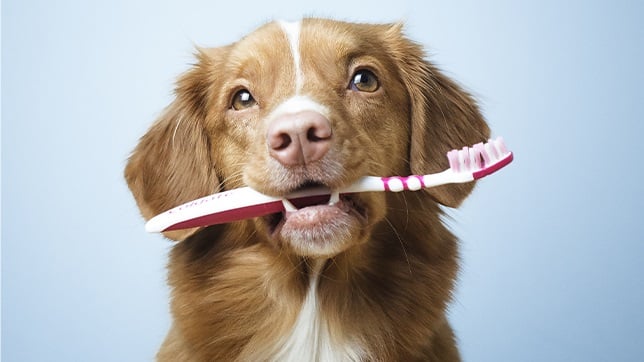
Should I brush my dog's teeth?
Yes - you should always brush your dog's teeth as part of their grooming routine. Dog chews and dental treats can help, but they aren’t enough to keep their teeth and gums healthy on their own.
Neglecting your dog's dental hygiene can lead to an excess of plaque and tartar, gum inflammation, and tooth decay. Over time, untreated dental disease can even lead to other health problems that can be serious if untreated.
Brushing your dog's teeth regularly is just one of the ways you can help to prevent dental problems from happening or getting worse.
However, it's worth noting that some breeds have different jaw alignments to others, and may therefore need their teeth brushed differently. We recommend asking your vet before you start cleaning your pup’s teeth - just in case they require special treatments.
When should I start brushing my puppy's teeth?
You can start brushing your puppy’s teeth as soon as they begin teething (usually around three months old). As with any form of training, the earlier you introduce them to toothbrushing, the easier it’ll be for them to accept it as part of their normal routine.
Is it too late to start brushing my dog’s teeth?
No, it's never too late. It’s preferable that you start as early as possible, but if you've missed the boat then there’s no need to fret - simply start the habit when you can. If they’re an older dog, however, do be sure to be gentle and ease them into having their teeth brushed. Be cautious, since this will be a new experience for them.
It may also be worth booking a dental assessment at the vet for an older dog before you start a new brushing routine. This will ensure any existing dental problems are caught and treated, helping minimise any discomfort to your pooch.
What you need before you start
Before you clean your dog's teeth, make sure you have the right tools to hand:
- A toothbrush that's the right size for your dog’s teeth and alignment (finger brushes or double-ended brushes work well).
- Toothpaste suitable for dogs (never use human toothpaste, as this can be toxic to dogs).
- A reward or treat ready for when you're finished.
- A relaxed and calming environment, to help your dog feel at ease.
If you’re unsure which products are best, check that they're VOHC-approved (Veterinary Oral Health Council), or ask your vet for advice.
How to brush your dog’s teeth
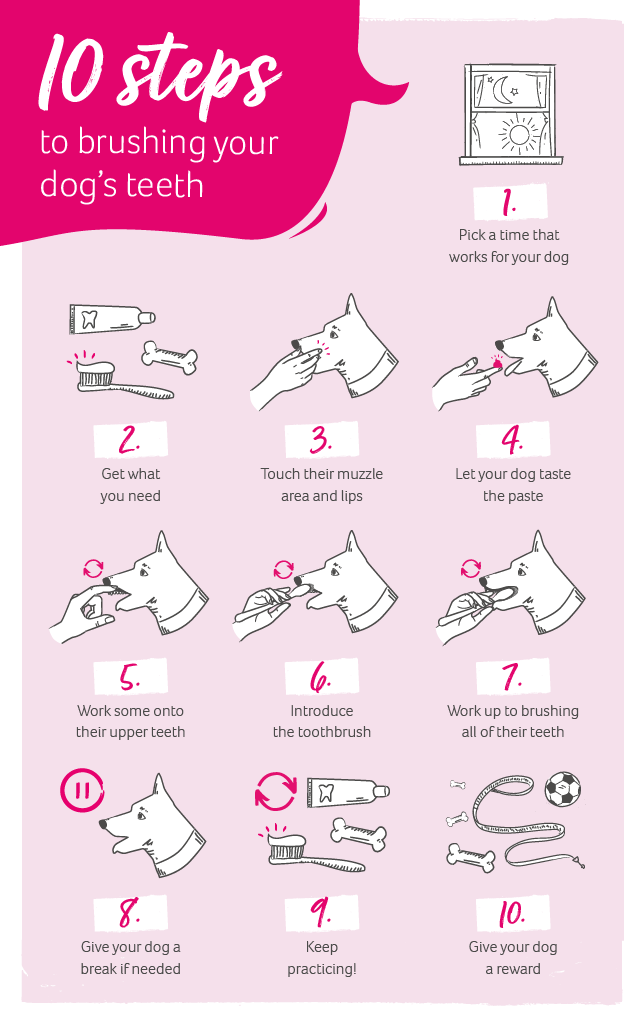
Brushing your pup’s teeth doesn’t have to be a battle. Here’s a step-by-step guide on how to clean a dog’s teeth safely and effectively:
Step 1: Pick a time that works for your dog
Choose a calm moment when your dog is relaxed, such as after a walk or dinnertime.
Step 2: Get what you need
Before you begin, get your dog-safe toothbrush, toothpaste, and tasty treats ready.
Step 3: Touch their muzzle area and lips
Ease your dog in by gently petting them, then softly touching their muzzle and lips. Once they’re relaxed, slowly lift their lip for around 30 seconds so they get used to the sensation. Reward them with a treat to encourage cooperation.
Step 4: Let your dog taste the paste
Let your dog lick a small amount of dog toothpaste from your finger so they can get used to the taste.
Next, repeat Step 3, but this time gently rub a small amount of toothpaste over their teeth using your finger for 30–45 seconds. Finish with praise and a treat.
Step 5: Work some onto their upper teeth
If your dog is happy so far, gently run your fingertips over their upper teeth with the toothpaste. Focus on a few teeth at a time and keep sessions short to avoid overwhelming them.
Step 6: Introduce the toothbrush
Once your dog is comfortable with finger brushing, slowly introduce the toothbrush. Insert it gently and run it over their teeth for around 30 seconds, allowing them to adjust to the new sensation.
Step 7: Work up to brushing all of their teeth
Use small circular motions and brush a few teeth at a time. Over several days, gradually increase how many teeth you brush until you can clean all sides of your dog’s mouth.
Step 8: Give your dog a break if needed
If your dog becomes restless or uncomfortable, pause and give them a break. Toothbrushing should always be a positive experience, so it’s fine to build things up slowly.
Step 9: Keep practising!
As your dog gets more comfortable, gradually increase brushing time from 30 seconds to around 60 seconds on each side. Consistency is key to making toothbrushing feel normal.
Step 10: Give your dog a reward
Praise and edible treats really help to positively reinforce the tooth brushing process, and your dog is more likely to accept the invasion if they know they’re getting something nice from it.
FAQs about cleaning a dog’s teeth
How often should I brush my dog’s teeth?
The gold standard is once a day - especially before bedtime to remove any debris after their mealtimes are finished.
If daily brushing isn’t possible, aim for at least three times a week, as recommended by PetMD and Vets4Pets. The key is consistency and using a technique that works for your dog.
Is it best to brush in the day or at night?
Generally speaking, it doesn’t matter too much what time of day you clean your dog’s teeth, but brushing at night is recommended. This is because the food your dog munches on throughout the day will leave debris and particles in their teeth that can feed bacteria overnight.
However, what’s most important is building a routine that works for you and your dog. You should aim to perform tooth brushing at the same time each day, ideally when your dog is calm and quiet. If your dog is food orientated, you may want to try brushing their teeth before their dinner, so they can be rewarded with a yummy bowl of their food.
What if my dog refuses toothbrushing?
If your dog refuses to have their teeth brushed, don’t force it. Instead, try the following tips:
- Go back a step in your routine - for example, practice gently touching their mouth again before reintroducing the brush.
- Try using a different type of toothbrush, like a finger brush.
- Make sessions shorter and finish with a treat.
If your dog continues to struggle, consider speaking to your vet or a qualified behaviourist for advice. They can recommend suitable products and safe alternatives.
What happens if you don’t brush your dog’s teeth?
Without regularly brushing your dog’s teeth, they’re at risk of ending up with dental health problems and complications. To stay on top of their dental hygiene, be sure to look out for the following signs of disease and infection:
- Damaged and bleeding gums
- Unpleasant odour (infected mouths give off a horrid odour)
- Sensitive teeth: look out for exposed roots
- Refusing food: your dog may be leaving blood in their bowls, refusing food, or having difficulty eating
- Teeth loss and discolouring
- Extra deposit building up around the teeth
What are the alternatives to brushing?
While brushing your dog’s teeth is the most effective way to manage plaque, there are helpful alternatives to support your pet’s dental care routine:
- Dental chews or sticks* can help reduce plaque and tartar.
- Specially designed toys can assist in scraping food off the teeth.
- Dry food (kibble) may help keep teeth cleaner than wet food.
- Oral gels, rinses, or water additives can be used for dogs who won’t tolerate brushing.
Always check with your vet before introducing new dental products, as some may not be suitable for all breeds.
Please note: Edible dental treats claim to be effective at reducing plaque and tartar, though the jury is still out on whether some of the ingredients are toxic in larger quantities.
Conclusion
Healthy teeth mean a happier dog. Building a routine of regular brushing, vet check-ups, and a balanced diet will help prevent dental disease and keep those pearly whites shining.
For more expert tips on caring for your pooch, visit our Dog Advice hub, or browse related articles below.
Related content

Need dog insurance?
Dog insurance can help cover the cost of veterinary treatment if your dog gets injured or falls ill.
Looking for more dog advice?
Find the information you need as we support you through every step of your journey with your canine companion.
We know pets
Here at Animal Friends Insurance, we're multi-award winning, with a passion to create a better life for every animal.
Since we were founded over 25 years ago, we protect the nation’s pets, while also making a difference to animal welfare and our planet. Thanks to you, we've donated over £10 million to more than 830 animal welfare charities and conservancies, helping to support vulnerable pets and wildlife around the world.
We’re proud to offer pet insurance that helps make a difference to the lives of animals everywhere.
The charitable work undertaken by Animal Friends Insurance is not regulated by the Financial Conduct Authority.