
3rd January 2024
How to treat dog car anxiety
If you want to enjoy long countryside walks or take your dog away on holiday, chances are you’ll need to bring them along in the car. But for some pets, car journeys aren’t so easy.
When your dog is stressed or anxious in the car, it can quickly turn an exciting trip into a difficult experience. Whether they’re scared of getting in the car, whining or panting during every journey, or struggling with motion sickness - it can be upsetting to see your pooch in distress.
The good news is that with the right approach, you can help ease travel anxiety in dogs. In this article, we will look at some simple measures you can introduce to keep your dog calm in the car and ensure that the experience is smoother and more enjoyable for everybody concerned.
In this article:
- Are car rides stressful for dogs?
- Do dogs get motion sickness?
- Signs your dog is anxious in the car
- How to reduce your dog’s car anxiety
- When should I take my puppy in the car?
- When to see your vet
Are car rides stressful for dogs?
While many dogs don’t mind car journeys, there are unfortunately some that suffer from varying degrees of car anxiety. This can happen for many reasons, including:
- Motion sickness
- Car noises and vibrations from the engine
- A previous bad experience in a car
- Associating cars with going somewhere they don’t like (the dreaded trip to the vet).
It’s quite common for car rides to stress dogs out, so there is no need to panic if yours is affected. With a little patience and the successful application of the steps below, you should be able to enjoy stress-free car rides with your dog before you know it.
Do dogs get motion sickness?
Yes, one of the reasons your dog might be unsettled is because they’re suffering from motion sickness. This is more commonly seen in puppies, whose ears are underdeveloped and unable to regulate their balance properly.
In most cases, your young pup will grow out of this as they mature, though sometimes, adult dogs can still have symptoms of motion sickness, such as excessive salivating, shaking, vomiting, and defecating.
It’s important to be aware that sometimes motion sickness can be linked to underlying issues like inner ear infections, vestibular disease, or side effects from medications. It’s always a good idea to talk to your vet if you suspect that your dog is unwell or having a reaction to any medication.
Signs your dog is anxious in the car
While it’s not always easy to tell, there are still some clear signs that indicate whether your dog is suffering from car anxiety. The most common signs include:
- Reluctance to get in the car
- Whining or barking
- Intense panting
- Yawning
- Excessive drooling
- Pacing or restlessness
- Shaking or trembling
- Lip smacking
Some of these symptoms overlap with signs of travel sickness, but aren’t always a sign that your dog is feeling unwell. Luckily, methods to help prevent motion sickness are also similar to treating general travel anxiety in dogs, which we’ll explore later in this guide.
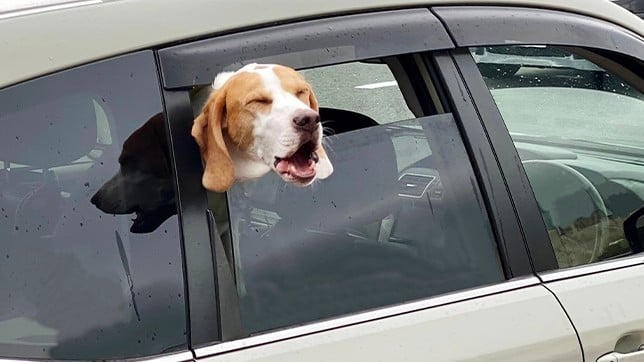
How to reduce your dog’s car anxiety
Once you recognise unusual behaviour, it’s important to address the issue and learn how to calm a dog in the car. A general fear of the car can often be treated with positive reinforcement and reward training.
As a starting point, try the following seven steps to stop your dog getting scared in the car and keep their tails wagging:
- Walk slowly towards the car and reward your dog with treats as they approach the vehicle. Repeat this process until your dog feels comfortable.
- Open the door or boot of the car and reward your dog. Slowly walk away with your dog sitting next to the vehicle and repeat several times to reinforce this process.
- Once your dog can stand next to the car with the door open, encourage them to investigate the vehicle on their own. As they do this, talk to them to reassure them and continue to give them treats.
- While your dog is in the car, close the door briefly and then open it again. Repeat this process until your dog can comfortably stay in the car for close to a minute.
- If your dog remains calm, then try getting in the front seat and starting the car. Reward your dog and then turn off the engine.
- Start the car once more, before trying to drive short distances. Reward your dog every time you bring the car to a stop, gradually increasing the journey time if they remain comfortable.
- Practice makes perfect. Hopefully, in no time at all, both you and your dog will be able to enjoy relaxing car rides!
If the above step-by-step process doesn’t work, there are some additional measures you can try for persistent travel anxiety in dogs. These include:
- Give them a puzzle toy for the journey to keep them busy
- Bring along comforting items like familiar toys, blankets, or clothing
- Make sure you take regular breaks
- Avoid playing loud music, and instead play soothing music or white noise
- Keep the temperature inside the car cool
- Lower the windows
- Exercise your dog shortly before the journey
Calming aids for stressed dogs in the car
There are a few products out there designed to keep an anxious dog more comfortable and safe while travelling. They can be used in addition to the methods above if needed:
- Dog pheromone sprays or collars (like Adaptil) that mimic natural calming scents
- Car seat belts or products like ThunderShirts (a snug vests that provide gentle pressure to help ease stress)
- Medication, including anti-sickness tablets
Note: Always consult your vet before introducing new products, especially supplements or medications.
When should I take my puppy in the car?
To get your puppy used to the car and avoid anxiety, you should start introducing them to car travel within their first 16 weeks. This timeframe is known as the puppy’s socialisation period, where they are most receptive to new experiences.
Therefore, this is the perfect time to get your pup used to being in a vehicle and minimise the risk of them developing dog car anxiety. During the first 16 weeks, you can help incentivise your puppy by:
- Feeding them treats both near the car and inside the vehicle. Try this with the engine on as well
- Playing fun games near the car
- Giving them plenty of fuss and praise whenever they’re near the car
- Starting to take them on short trips before building up to longer journeys
- Being patient and allowing time for their confidence to build.
Note: you should not let puppies jump out of cars, as the impact can cause permanent injuries to their under-developed joints.
When to see your vet
If your dog is constantly stressed in the car and shows symptoms of sickness or persistent panting, whining, shaking, and restlessness, speak to your vet. They can:
- Rule out motion sickness vs anxiety
- Prescribe anti-nausea or anti-anxiety medication if needed
- Recommend safe over-the-counter remedies
Early intervention can make all the difference, and empower you to take the right steps needed to help your dog.
Conclusion
Now that you know more about dog car anxiety and how to tackle this common problem, you should hopefully feel more confident about taking your beloved pooch in the car.
Follow the dog advice in this article to ensure your doggo can live stress-free and enjoy the ride!
Related resources
Anxiety in Pets
Positive training vs. punishment
Advice on travelling with your dog

Need dog insurance?
Dog insurance can help cover the cost of veterinary treatment if your dog gets injured or falls ill.
Looking for more dog advice?
Find the information you need as we support you through every step of your journey with your canine companion.
We know pets
Here at Animal Friends Insurance, we're multi-award winning, with a passion to create a better life for every animal.
Since we were founded over 25 years ago, we protect the nation’s pets, while also making a difference to animal welfare and our planet. Thanks to you, we've donated over £10 million to more than 830 animal welfare charities and conservancies, helping to support vulnerable pets and wildlife around the world.
We’re proud to offer pet insurance that helps make a difference to the lives of animals everywhere.
The charitable work undertaken by Animal Friends Insurance is not regulated by the Financial Conduct Authority.