
1st September 2026
Why your cat wags their tail: Tail language explained
Cats are notorious for their mysterious behaviour, and one of their unique gestures is tail wagging. While we might associate tail wagging with dogs, a cat’s tail swishes and sways carry their own unique significance.
In this article, we’ll explore the meaning of your cat’s different tail movements, from signs of affection to showing that they need some space.
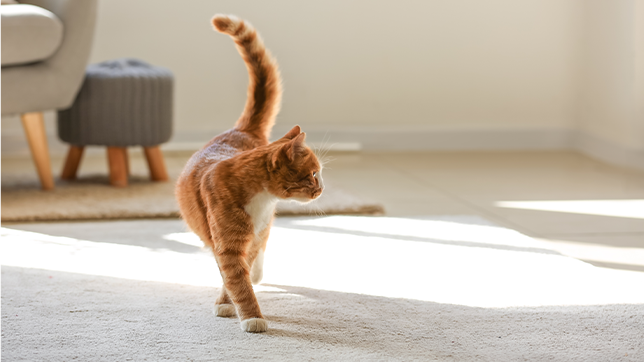
Why do cats wag their tails — is there a ‘language’?
Cats are amazing communicators. Research shows that a cat’s tail behaviour forms part of a wider visual signalling system that expresses how they’re feeling to other animals and humans around them, helping to regulate social distance and avoid conflict.
While cats use many body cues to communicate, including ear position and posture, their tail movements often act as the clearest emotional signal. They may wag their tail to let you know they’re annoyed, scared, happy, or playful, but their tail can also be a sign of affection.
By paying attention to these tail movements and their meanings, you can understand whether your cat is inviting your interactions, or warning you that they’re uncomfortable — which can make a huge difference in your relationship.
Different types of cat tail movements (and what they mean)
Here are some of the most common tail movements in cats along with an explanation of what your feline friend may be trying to tell you.
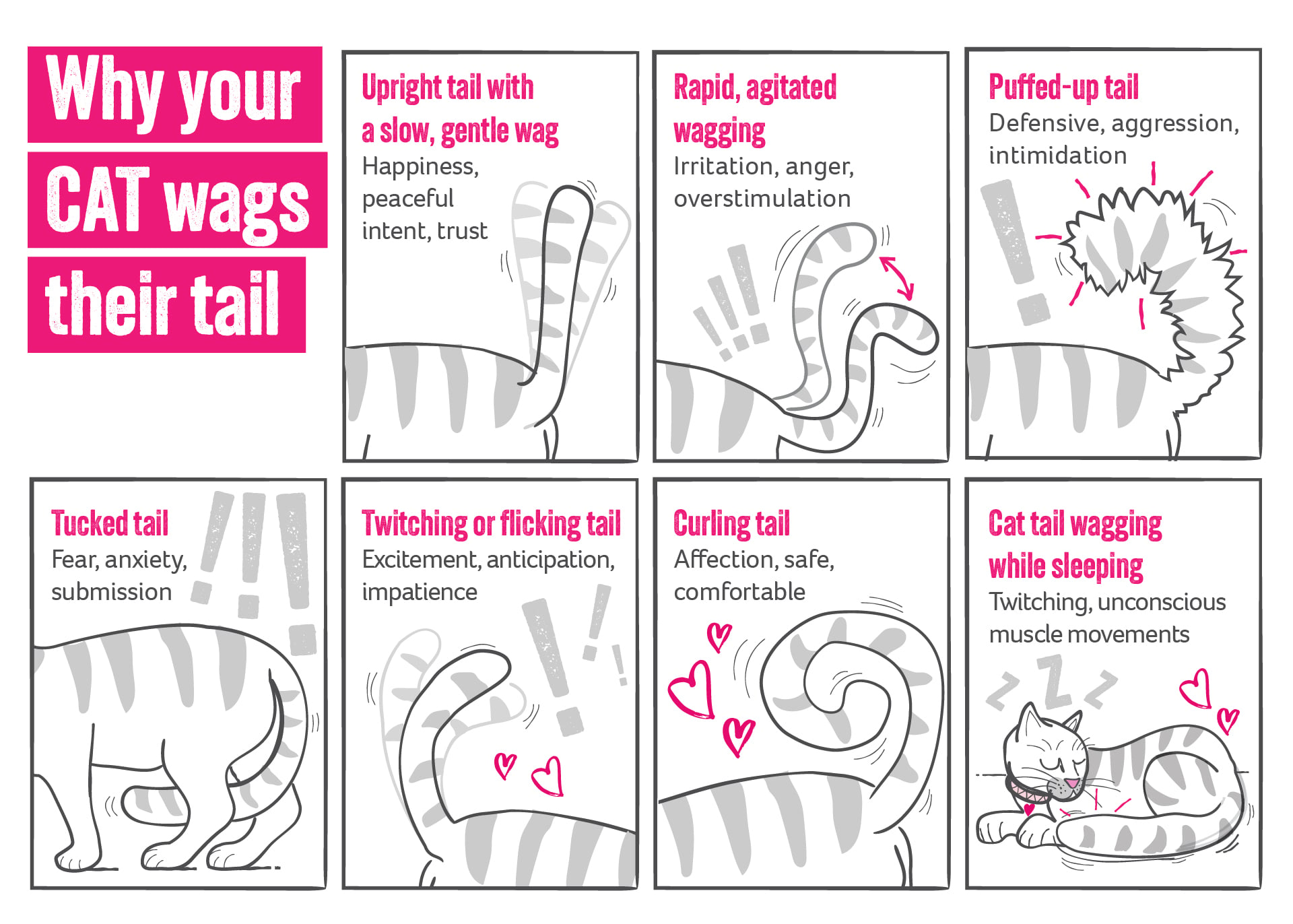
Upright tail with a slow, gentle wag
A tail held high with a gentle sway from side to side could mean that your feline friend is feeling happy.Cats often hold their tail upright when approaching a familiar person or another friendly cat, and is a gesture often used to show peaceful intent or trust.
Sometimes, you might notice a slight curve (a bit like a question mark) at the end as it sways slowly to signal their happiness.
It might not be as obvious as a dog’s wag, but it’s a subtle way of letting you know that they’re feeling good. Why not use this as an invitation to interact with your cat and engage in some play time with them?
Rapid, agitated wagging
On the other end of the spectrum, rapid and agitated tail movements in cats can indicate irritation, anger, or overstimulation. If your cat's tail is low and stiff and its wagging consists of whipping, thrashing, and lashing, it's a clear sign that they may be feeling stressed or annoyed.
Remember: When your cat’s tail is moving like this, approach with caution, as your cat may not be in the mood for interaction.
Puffed-up tail
A puffed-up or bristled tail is a defensive posture as they attempt to make themselves appear larger and more intimidating to scare off any potential attackers. This tail will often be accompanied by other signs of aggression like raised hair along the ridge of their arched back, and possibly some hissing!
If you spot this stance in your feline, they might feel threatened or frightened, so be sure to give them space to calm down.
Tucked tail
When your cat tucks their tail between their legs, it’s usually a sign of fear, anxiety, or submission.You might notice this tail position during stressful moments, such as loud noises, visits to the vet, or introductions to new pets or people. Some cats also tuck their tails when feeling unwell or unsure of their surroundings.
If you spot a tucked tail, speak softly, avoid sudden movements, and give your cat a quiet space to retreat.
Twitching or flicking tail
A slightly quivering tip of the tail can express excitement or anticipation. You might see twitching tail movements when your cat is focused on a prey item (like a toy), or is about to engage in play with another cat, and it’s usually followed by a pounce.
You may also notice your cat’s tail flicking more sharply from side to side. Gentle, rhythmic flicks often show mild irritation or impatience, for example, when they’ve had enough petting or want to be left alone.
If the flicking or twitching becomes fast or intense, it can mean your cat is becoming overstimulated or annoyed, so could be a good time to pause the interaction.
Curling tail
When your cat’s tail curls around you, it’s a clear sign of trust and affection, which is their way of saying they feel safe and comfortable. Cats sometimes do this to other cats too, as a friendly greeting or bonding gesture.
If your cat wraps their tail around themselves, it usually means they’re calm and content. However, if their body looks tense and the tail is held tightly against them, it could also signal that they’re feeling anxious or uncertain.
Cat tail wagging while sleeping
Observing your cat's tail behaviour while they're asleep can be entertaining and intriguing, as you wonder what they might be dreaming about. While it might seem like they're having a grand adventure in the land of nod, it's more likely a result of the cat's unconscious muscle movements.
This is because cats can experience rapid eye movement (REM) sleep, during which their brains are highly active, and they might exhibit certain behaviours such as twitching of their eyes, ears, paws, and tail.
Do all cats wag their tails?
While tail wagging is a common behaviour among our feline friends, not all cats exhibit this trait in the same way and might use other forms of communication.
Some cats may use their tails more expressively than others, and the intensity and frequency of tail wagging can vary, based on the individual cat's personality, experiences, and even their breed. So, don’t panic if your feline friend isn’t a tail-wagger, it’s completely normal!
Reading your cat’s whole body language
Cat tail wagging can provide strong clues to how your feline friend is feeling, but the meaning should never be read in isolation. There are other signals that show when a cat is happy, angry, or afraid, that come from a combination of their ear positions, posture, and vocalisations.
Happy cats will often point their ears forward as well as raising and gently swaying their tails, and they may also purr or meow affectionately. On the other hand, flattened ears, a tense posture (crouching or arching back) and a lashing tail all warn that they’re angry or afraid.
We’ve put together a guide to cat body language to help you learn more about interpreting other signals of communication alongside your cat’s tail movements.
Conclusion
Tail movements are one of the clearest windows into your cat’s emotions, from calm contentment to cautious warning. By paying close attention to your cat’s tail and overall body language, you can develop a better understanding of their feelings and intentions.
So, next time you spot a wag in your cat’s tail, take a moment to consider what they might be trying to tell you, so that you can avoid misunderstandings and make every interaction a positive one.
For more cat behaviour tips and insights, visit our cat advice hub, or browse related content below.
Related articles:

Looking for more cat advice?
We’ve written some handy cat advice guides, to help you unlock the secrets of your mysterious moggy.

Need cat insurance?
Cat insurance can help cover the cost of veterinary treatment if your cat gets injured or falls ill.
We know pets
Here at Animal Friends Insurance, we're multi-award winning, with a passion to create a better life for every animal.
Since we were founded over 25 years ago, we protect the nation’s pets, while also making a difference to animal welfare and our planet. Thanks to you, we've donated over £10 million to more than 830 animal welfare charities and conservancies, helping to support vulnerable pets and wildlife around the world.
We’re proud to offer pet insurance that helps make a difference to the lives of animals everywhere.
The charitable work undertaken by Animal Friends Insurance is not regulated by the Financial Conduct Authority.