
1st September 2026
How to keep your dog cool and avoid heatstroke in summer
If you’re reading this during a UK heatwave, you might be wondering how to keep your dog safe in the heat. While sunny weather can be fun, high temperatures can quickly become dangerous for dogs.
Find out exactly what temperature is too hot for dogs, the risks of heatstroke, and our top tips for keeping dogs cool in summer.
In this guide, we'll cover:
- Signs of heatstroke to look out for
- What to do if your dog has heatstroke
- What temperature is too hot for dogs?
- Top 10 tips for keeping your dog safe during a heatwave
- Keeping dogs cool FAQs
Signs of heatstroke to look out for
Hot weather can become dangerous for dogs very quickly. Unlike humans, dogs can only sweat through their paws, so they mainly rely on panting to cool themselves down. During humid weather or heatwaves, panting becomes much less effective — increasing the risk of heatstroke.
Heat-related illnesses can include dehydration, heat exhaustion, overheating, and heatstroke. Knowing the early signs of heatstroke can help you act quickly in an emergency.
Symptoms of heat-related illness in dogs
Call your vet immediately if you notice signs of heatstroke in your dog.
Watch out for:
- Excessive panting or struggling to breathe
- Drooling or foaming at the mouth
- Bright red gums or tongue
- Lethargy, weakness, or drowsiness
- Confusion or disorientation
- Wobbling, trembling, or loss of coordination
- Vomiting or diarrhoea
- Seizures or collapse
Important: If you see a dog locked in a hot car, caravan, or conservatory and showing signs of distress, call 999 straight away.
What to do if your dog has heatstroke
If you think your dog is suffering from heatstroke, act quickly and contact a vet immediately.
Step 1: Move them somewhere cool
Move your dog into the shade or a cool indoor area while someone calls the vet.
Step 2: Offer cool water
Give your dog small amounts of cool, fresh water to drink if they can.
Step 3: Start cooling them down
Knowing how to cool a dog down safely is important. Use cool (not ice-cold) water and airflow to gradually lower their temperature.
You can:
- Place them on a cooling mat or cool, damp towel
- Spray their coat with room-temperature water
- Use a fan to help cool air circulate
- Place a wrapped ice pack under their armpits or against their neck
Avoid wrapping your dog in wet towels, as this can trap heat. Never place ice or ice packs directly onto their skin, as this can cause shock or ice burns.
Step 4: Cool their paws and body
Pour cool (not ice-cold) water over your dog’s paws and body if they tolerate it well. Never pour water over their face.
Step 5: Transport them safely
Once your vet advises it’s safe to travel, take your dog to the practice in a cool, well-ventilated car. Continue cooling them during the journey if advised by your vet.
What temperature is too hot for dogs?
The answer depends on your dog’s breed, age, health, and the type of activity they’re doing. Even temperatures that feel comfortable to us can put dogs at risk of overheating.
What temperature is too hot to walk a dog?
As a general guide:
| 7°C to 15°C | Usually safe for most dogs |
| 16°C to 19°C | Higher-risk dogs, including flat faced breeds and overweight dogs, may struggle |
| 20°C to 23°C | Dangerous for some dogs, especially during exercise |
| 24°C to 31°C | High risk of heatstroke in dogs |
| 32°C and above | Extremely dangerous for all dogs |
Puppies, senior dogs, large breeds, flat-faced breeds, overweight dogs, and long-haired dogs are often more vulnerable in hot weather.
How to check if the pavement is too hot for your dog to walk on?
Hot pavements and tarmac can burn your dog’s paws within seconds. Before heading out, try the simple five-second test:
- Place the back of your hand on the pavement for five seconds. If it feels too hot for you to hold comfortably, it’s too hot for your dog to walk on
- If the ground is too hot, wait until temperatures drop later in the evening or head somewhere shaded and grassy instead
Why hot cars and indoor spaces are dangerous
Temperatures rise rapidly inside enclosed spaces during warm weather — even when it doesn’t feel extremely hot outside.
For example:
- A car can reach around 43°C in just 30 minutes when it’s only 23°C outside
- In hotter weather, temperatures can become deadly within minutes
Cars, caravans, conservatories, sheds, and other enclosed spaces can quickly become fatal for dogs. Once a dog’s body temperature reaches around 40°C, they may no longer be able to cool themselves down properly.
Never leave your dog alone in a hot vehicle or enclosed space, even for a short time.
Top 10 tips for keeping your dog safe during a heatwave
Follow our top tips below, to discover the many ways to keep your dog safe and cool while the sun’s out…
1 – Keep them hydrated
Make sure your dog has constant access to fresh, clean, and cool drinking water.
Learn more about keeping your dog hydrated here.
2 – Walkies during cooler times only
Avoid too much time outside during the hottest hours of the day. Instead, walk your dog early in the morning or later in the evening when temperatures are lower.
3 – Offer cold treats
Homemade frozen treats can be a great way of keeping dogs cool in summer while giving them some extra hydration. Learn how to feed your dog ice cubes safely to cool them down.
4 – Don’t let them lounge in the sun
Even if your dog enjoys sunbathing, it’s important they have access to shade and don’t spend long periods lying in direct sun during hot weather.
5 – Create cool spaces
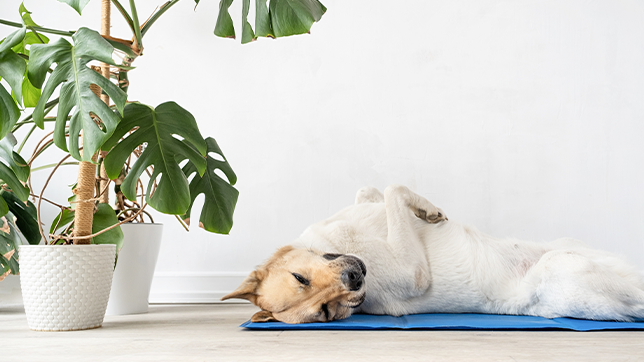
Set up shaded areas indoors or outdoors where your dog can relax comfortably. Cooling mats, damp towels, fans, and shaded spots in the garden can all help your dog stay cool.
Don’t forget lots of fresh drinking water!
6 – Avoid travelling
Where possible, avoid travelling with your dog in a car or on public transport when the weather is hot.
Important: Leaving your dog in a car is never safe in a hot car.
7 – Apply dog-safe suncream
Keeping your dog out of the sun altogether during a heatwave is best for their health.
However, if you’re enjoying a daytrip in cooler temperatures while the sun is shining, using a vet-approved, pet-safe suncream on any exposed skin could help protect them from sunburn.
8 – Groom them more frequently
Regular grooming can help remove excess fur and keep long-haired or thick-coated dogs more comfortable during warm weather.
Avoid shaving double-coated breeds unless advised by a professional groomer or vet, as their coat can help regulate temperature.
9 – Protect their paws
Hot pavements can burn your dog’s paw pads. Walk on grass or shaded routes where possible, and always check surfaces before walks.
Dog boots may also help protect sensitive paws if your dog will wear them.
10 – Entertain them with puzzle toys
Active dogs may find themselves bored when their normal exercise routines are halted during heatwaves. To keep your canine companion entertained and their mind stimulated, introduce them to some super-fun, low-energy puzzle toys, e.g. a DIY snuffle mat.
Thinking of taking your dog to the beach? If so, check out our articles on beach safety and sand impaction, to enable you both to enjoy fun in the sun safely.
For even more advice about keeping your dog happy and healthy this summer, have a chat with the vet experts over at Joii Pet Care!
Keeping dogs cool FAQs
Dogs should never be left alone in a caravan during hot weather unless the temperature inside can be safely controlled and monitored. Caravans can heat up very quickly, even when it doesn’t feel especially hot outside, putting dogs at risk of heatstroke.
If you’re travelling with your dog, make sure there’s plenty of ventilation, shade, fresh water, and cooling options available at all times.
Most dogs can safely wear a cooling coat for short periods during walks or outdoor activities, but it’s important to follow the manufacturer’s guidance. Cooling coats should stay damp and breathable to work properly.
Check your dog regularly for signs of discomfort, overheating, or skin irritation, and remove the coat once it becomes dry or warm.
Many dogs begin to struggle once temperatures rise above around 20°C, especially during exercise. However,that depends on factors like their breed, age, weight, coat type, and overall health.
Flat-faced breeds, puppies, senior dogs, overweight dogs, and long-haired breeds are often more sensitive to heat and may overheat more quickly.
Common signs of heat stroke and overheating in dogs include excessive panting, drooling, lethargy, bright red gums, vomiting, wobbling, or difficulty breathing.
If your dog seems distressed, weak, or unable to cool down, move them somewhere cool immediately and contact your vet for advice.

Need dog insurance?
Dog insurance can help cover the cost of veterinary treatment if your dog gets injured or falls ill.
Looking for more dog advice?
Find the information you need as we support you through every step of your journey with your canine companion.
We know pets
Here at Animal Friends Insurance, we're multi-award winning, with a passion to create a better life for every animal.
Since we were founded over 25 years ago, we protect the nation’s pets, while also making a difference to animal welfare and our planet. Thanks to you, we've donated over £10 million to more than 830 animal welfare charities and conservancies, helping to support vulnerable pets and wildlife around the world.
We’re proud to offer pet insurance that helps make a difference to the lives of animals everywhere.
The charitable work undertaken by Animal Friends Insurance is not regulated by the Financial Conduct Authority.