
1st September 2026
Guide to managing your horse’s temperature and avoiding heatstroke in the summer
To keep your horse cool during the summer and prevent heatstroke, it's essential to consider a combination of strategies to reduce heat exposure and maintain hydration.
In this guide, we’ll cover the following top tips:
- Provide constant access to water
- Clip thick coats
- Avoid riding during peak heat
- Replace lost electrolytes
- Turn out during cooler times
- Use fans in stables
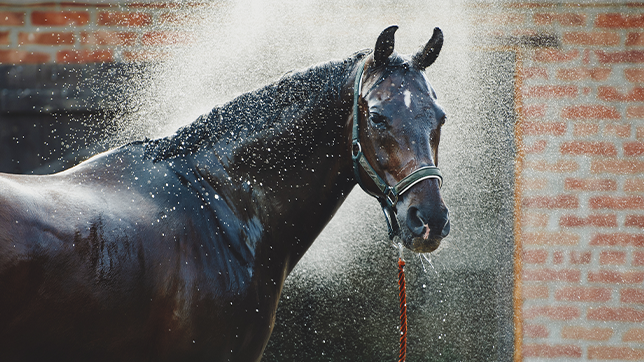
- Cool your horse with showers
- Give your horse shelter while traveling
- Monitor for heatstroke symptoms
Plus, we’ll explain what heatstroke in horses is, how to keep track of your horse’s temperature, and share additional expert advice.
What is heatstroke in horses?
Heatstroke occurs when a horse’s body temperature rises to dangerous levels due to prolonged exposure to high temperatures or intense physical activity in hot conditions.
Horses can suffer from heatstroke when their body is unable to cool itself efficiently, either from insufficient hydration, excessive exercise, or a lack of shade or ventilation.
When a horse’s body temperature rises above 106°F (41°C), it can lead to serious health problems such as organ failure, colic, and even death. The symptoms of heatstroke in horses can include excessive sweating, rapid breathing, disorientation, lethargy, and unsteadiness.
If left untreated, heatstroke can be fatal, so it’s crucial for horse owners to be vigilant in recognising the signs and to take preventive measures during hot weather.
To help prevent heatstroke and keep your horse safe during the summer, here are several effective ways to manage their temperature and ensure they stay cool and comfortable.
Provide constant access to water
Always ensure your horse has access to fresh, cool water at all times. Horses can become dehydrated quickly in hot weather, so it's important to monitor their water intake and replace water frequently to keep it cool and appetising.
Clip thick coats
Horses with thick coats can struggle in the heat, particularly those suffering from conditions like Cushing’s disease, which leads to excessive hair growth. Regularly clipping your horse’s coat will help them stay cooler. However, after clipping, ensure they have sun protection, as their newly exposed skin can burn more easily.
Avoid riding during peak heat
If you plan to ride, avoid the hottest times of day, typically between noon and 4 p.m. Instead, ride early in the morning or later in the evening when temperatures are lower. If you must exercise your horse during the day, try to keep the intensity low to prevent excessive sweating.
Replace lost electrolytes
Sweating leads to a loss of vital electrolytes. To help your horse recover, offer electrolyte supplements in their feed or water to replenish what they have lost. Ensure that fresh water is also available, and follow the manufacturer’s instructions to avoid over-supplementation.
Turn out during cooler times
During the summer, consider turning your horse out in the early mornings or evenings when the temperature is lower. If they must be outside during the day, make sure they have access to plenty of shade, whether from trees, hedges, or a field shelter. This will help keep them cooler during the heat.
Use fans in stables
If you stable your horse during the day to avoid the heat, ensure the stable is well-ventilated. Use fans to circulate air, ensuring they are safely positioned out of reach. This can make a significant difference in keeping the environment cooler and more comfortable for your horse.
Cool your horse with showers
If your horse is sweating heavily, a cold shower can help bring down their body temperature. After showering, use a sweat scraper to remove excess water, as remaining water can heat up and reverse the cooling effect.
Give your horse shelter while traveling
If you’re traveling with your horse, leave early to avoid the midday heat. Ensure that your horse's transport has proper ventilation and airflow. You can also open windows to keep the air circulating, which will help maintain a cooler environment inside the transport.
Monitor for heatstroke symptoms
Heatstroke is a serious concern in hot weather. Symptoms to watch for include excessive sweating, rapid breathing, lethargy, unsteadiness, and disorientation. If you notice any of these signs, it's crucial to call a vet immediately.
To treat heatstroke, move your horse to a shaded, cool area, provide them with water (but don’t allow them to drink too quickly), and apply cold water to their body until help arrives.
By following these steps, you can help prevent heatstroke and ensure your horse remains healthy and comfortable throughout the summer months.
A guide to your horse's temperature
Just like humans, a horse's body temperature can vary slightly from individual to individual, but it generally falls within a specific range that helps indicate their health. For most horses, a healthy temperature typically ranges from 36.0°C to 38.0°C.
It’s important to note that a temperature above 38.0°C may indicate a health concern, while a temperature below 37.0°C can still be normal for some horses. By keeping track of your horse’s temperature, you’ll be better equipped to spot potential issues early and ensure they stay in good health.
Know your horse's normal temperature
One of the best ways to monitor your horse’s health is to get familiar with what’s normal for them. For instance, a temperature of 37.8°C might be typical for one horse, but not for a horse whose usual temperature is closer to 36.9°C.
By routinely checking your horse’s temperature, you’ll become more attuned to what is normal for them, making it easier to identify any changes. Even small shifts within the healthy range could indicate a problem, so it’s important to keep an eye on your horse’s temperature regularly.
Understanding and monitoring your horse’s temperature is a simple yet effective way to stay on top of their health and ensure they remain comfortable, especially during the summer months.
How to keep your horse cool in hot weather
Horse owners face unique challenges in trying to keep horses cool in the summer. In addition to our advice on avoiding heatstroke, we've put together some helpful tips to ensure your horse stays extra comfortable and safe in the heat.
Wet fly rugs for extra cooling
Wetting a white fly rug in the morning, then refreshing it at lunchtime and in the evening, can help cool down your horse. However, a fly rug dries quickly, so it may need wetting more than three times a day, depending on how hot it is. This method can provide shade and cooling all day long, but it's no substitute for physical shade from a field shelter or tree.
Hydration is key
Keeping your horse hydrated is vital in the heat. Using products designed to replenish electrolytes and optimise water absorption will increase the chances of your horse maintaining good hydration and keeping their own body temperature regulated.
Managing stable temperature
In the summer months, stables with skylights can become unbearably hot. To keep the temperature down, cover the skylights with dark mesh or other materials that block sunlight and keep the inside cooler for your horse.
Cooling their feet
To prevent your horse’s hooves from drying out and their shoes from loosening, consider putting their feet in water. Adding a good moisture balm can help maintain hoof health during the warmer months.
Encourage drinking with apple juice
To encourage your horse to drink more water, try adding a splash of apple juice to their water bucket. This can be a great way to boost their water intake, but always be mindful of their health conditions, especially if they are prone to laminitis.
Fun and cooling treats
A fun way to keep your horse cool while encouraging hydration is by freezing carrots in small tubs of water. These carrot ice blocks provide a cool, entertaining treat and can help increase their water intake, all while keeping them refreshed during hot days.
Heatstroke in horses FAQs
Horses should drink up to 55 litres of water per day, depending on factors such as their size, activity level, and the temperature. In hot weather, horses may need even more water to stay hydrated.
Always ensure your horse has access to fresh water throughout the day, especially if they are working or spending time outdoors in the heat.
Yes, horses can get sunburnt, particularly those with lighter coats or exposed skin. Areas like the muzzle, ears, and any hairless patches are especially susceptible to sunburn. Using sunblock on these areas and providing shade with fly masks or rugs can help protect your horse from harmful UV rays.
Generally, temperatures above 28°C (82°F) can be too hot for regular riding, especially if the humidity is high. However, each horse is different, and factors like their breed, fitness level, and acclimatisation to hot conditions will influence their tolerance.
It's best to ride early in the morning or late in the evening when it's cooler, and avoid intense exercise during peak heat hours.
If your horse is suffering from heatstroke, the vet will act quickly to reduce their body temperature. They will likely administer cold water baths, apply ice packs, and provide intravenous fluids to rehydrate the horse and restore electrolyte balance.
The vet will monitor your horse’s vital signs and may use medications to help manage any complications that arise from the heatstroke. Immediate treatment is crucial to prevent organ damage and improve recovery chances.
Yes, horses can sweat, and in fact, sweating is an important way for them to regulate their body temperature. When horses exert themselves or are exposed to high temperatures, their bodies produce sweat to help cool them down. Horse sweat contains a protein called latherin, which helps the sweat spread across their coat and evaporate, cooling their body more efficiently.
However, unlike humans, horses can't sweat as much in extremely hot or humid conditions. This can make them more susceptible to heatstroke if they become overheated, especially if they’re working hard in high temperatures.
It's important to monitor your horse's sweating during the summer months and make sure they stay hydrated to help with this cooling process.

Need horse insurance?
Horse insurance can help cover the cost of veterinary treatment if your horse gets injured or falls ill.
Looking for more horse advice?
Support and advice so that owners and riders can take the very best care of their equine.
We know pets
Here at Animal Friends Insurance, we're multi-award winning, with a passion to create a better life for every animal.
Since we were founded over 25 years ago, we protect the nation’s pets, while also making a difference to animal welfare and our planet. Thanks to you, we've donated over £10 million to more than 830 animal welfare charities and conservancies, helping to support vulnerable pets and wildlife around the world.
We’re proud to offer pet insurance that helps make a difference to the lives of animals everywhere.
The charitable work undertaken by Animal Friends Insurance is not regulated by the Financial Conduct Authority.