
26th May 2026
Jack Russell Terrier breed guide
Not afraid to share their opinion, the Jack Russell Terrier makes up for their lack of size by having a huge personality. Read our guide to find out more about the loyal Jack Russell Terrier breed.
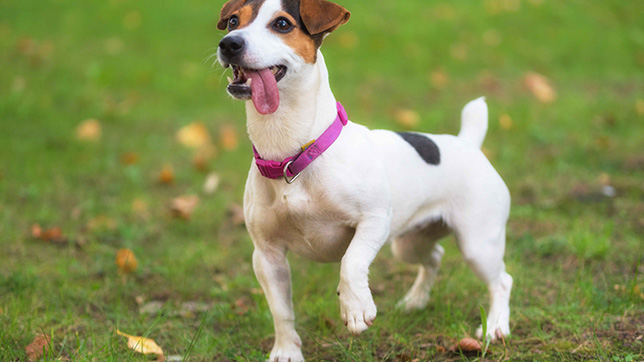
Jack Russell Terrier overview
| Size | Small - 4-6kg |
| Lifespan | 13-16 years |
| Exercise needs | Very High - 2-3 hours daily |
| Grooming needs | Low - weekly grooming required |
| Suitable for | Active households, and may need additional supervision to live with children. |
| Outdoor space | Needs a medium sized garden for training and stimulation |
| Common health issues | Eye issues, deafness |
| Personality | Vocal, independent, energetic |
How much does it cost to have a Jack Russell Terrier?
Dogs truly enrich our lives through their loyalty and the companionship they provide. However, being a pet parent also requires a significant financial investment, alongside the time and effort we devote to caring for our dogs every day.
The minimum costs of owning a Jack Russell terrier will vary considerably based on a huge variety of different factors. Just a few of those factors include (but are not limited to) availability of pet products and services where you live, your dog’s overall health, and local veterinary costs.
To give you an idea of the care, products, and services you’re likely going to have to pay for when you own a Jack Russell Terrier, here’s a very basic list:
- Everyday essentials like food, bowls, dog bed, bedding, collar with ID tags, harness, lead, toys, treats, poo bags, first aid kit, travelling equipment, dental products.
- Coat care products including brushes and dog-safe shampoo.
- Initial veterinary costs, covering microchipping, spaying or neutering and first vaccinations.
- Ongoing preventative care such as annual vaccinations, flea and worming treatment, annual health checks.
- Other costs including pet sitting when you go on holiday, doggy daycare while you’re at work and Jack Russell Terrier insurance to protect against unexpected vet care costs,
As a general guideline, it’s estimated that caring for a Jack Russell Terrier could cost upwards of £50 a month.
Common characteristics of the Jack Russell Terrier breed
Please remember that the following characteristics are considered ‘average’ for Jack Russell Terriers, and since each dog is a unique individual, your Jack Russell Terrier’s characteristics may differ.
How big are Jack Russell Terriers?
Most Jack Russells reach 25-30cm in height at the shoulder.
How much do Jack Russell Terriers weigh?
The average weight for a Jack Russell is approximately 4-6kg.
How long do Jack Russell Terriers live?
Jack Russells usually have a lifespan of around 13-16 years – though some have been known to live for up to 18 years or more!
Do Jack Russell Terriers bark a lot?
Yes, Jack Russell Terriers are a vocal breed who bark a lot. They are an excitable dog famous for sharing their opinion by barking about anything, from an approaching postman to reminding you that it’s dinner time. To help calm your Jack Russell’s tendency to shout about everything, you may want to check out our guide on how to handle your dog’s barking.
Typical Jack Russell Terrier appearance
With bold, almond-shaped eyes and petite facial features full of expression, it’s no surprise that Jack Russells capture the affections of pet parents worldwide. Their short legs coupled with a medium-length, agile frame make for a ‘pawfect’ combination of cuteness and sporting capability!
A Jack Russell’s tail is usually set high and carried upwards while the Jack Russell is active, to allow for freedom of movement as they run, jump, and play.
Whether smooth or rough, a Jack Russell’s coat requires regular grooming to stay in tip top condition.
Although Jack Russells can be seen in a variety of coat colours, they tend to have a white base coat with different coloured markings. Usually, a Jack Russell’s coat markings will be black and/or tan (pale brown) in a bi-colour (two colour) or tricolour (three colour) pattern.
Typical Jack Russell Terrier temperament
Being such a devoted companion is a major trait of the Jack Russell, who adores spending every waking moment with their human family. So, your Jack Russell will thrive when in your company for all your adventures – whether that’s beach trips, camping, holidays, or even shopping!
It’s important not to leave your Jack Russell alone for too long, however, as they’re known to suffer from separation anxiety.
Jack Russells are highly energetic dogs who require an active form of exercise for at least an 2 hours every day. They’ll also need plenty of mental stimulation while they’re not out adventuring, to prevent them from performing undesirable behaviours.
Since they’re so clever, Jack Russells tend to be fantastic to train – as long as you find the right reward to motivate them and keep their attention on you! However, you’ll have to work hard at recall training with your Jack Russell, because they’re known to instinctively chase small animals.
Due to their hunting roots, Jack Russells may struggle to get along well with cats – unless they’ve been introduced safely and brought up with cats from a young age.
Jack Russell Terrier health conditions
It’s not unusual for pedigree breeds to be prone to certain health concerns, and, unfortunately, Jack Russell Terriers are no exception. Here are a few health conditions commonly seen in the Jack Russell Terrier:
- Luxating patellas (their kneecaps slip out of place).
- Atopy (an allergic skin disease that causes sore, itchy skin).
- Legges Perthes disease (deformity of the hip joint).
For further information about some of the common conditions experienced by Jack Russell Terriers, please visit our Jack Russell Terrier health problems article.
Remember: Keep an eye out for any health issues your Jack Russell Terrier may develop, and get your canine companion checked by a vet if you have any concerns. If you are considering pet insurance, be sure to read our guide about insuring your Jack Russell Terrier.
Caring for a Jack Russell Terrier
Jack Russell Terriers enjoy keeping their minds busy, so they need plenty of mental stimulation through training, puzzle toys, and canine sports. If they aren’t exercised enough or kept entertained, Jack Russells may start to display unwanted behaviours, like being destructive. That’s why it’s essential to understand a Jack Russell terrier’s needs before adding one to your family.
Here’s our basic guide to the grooming process for dogs with shorter coats:
- Prepare all the kit you might need, like brushes and treats, then set up a suitable space for dog grooming, e.g. a well-lit room with non-slip flooring. If your Jack Russell Terrier’s short coat is dirty/muddy, you could bathe them before brushing – though there should ideally be at least six weeks between baths, to limit skin irritation! Additionally, you can use the grooming session as an opportunity to check your Jack Russell Terrier for any potential signs of inflammation, hair loss, or hidden injuries before you begin.
- First, you’ll want to remove any loose hair from your Jack Russell Terrier’s coat. Start with a soft bristle brush and sweep it across larger areas of your Jack Russell Terrier’s coat in the same direction as their hair (head to tail), avoiding their face.
- Then, using a slicker brush, carefully work through the larger sections of your Jack Russell Terrier’s coat (back, sides, and chest) to clear any remaining loose hair and debris. If your Jack Russell Terrier is moulting, you may find that this step takes a little longer!
- Once your Jack Russell Terrier’s coat is clean, use a grooming glove (or grooming mitt with rubber bristles) to gently massage their skin, while adding a final shine to their coat.
Don’t forget to raise your Jack Russell Terrier throughout the grooming process and reward them after every grooming session – to remind them that being groomed is a positive experience.
Check out our article of dog grooming hacks for even more handy hints to help keep your Jack Russell Terrier’s coat healthy!
It’s always worth speaking to a vet about the right type, level, and amount of exercise your Jack Russell Terrier should be enjoying on a daily basis. Alongside this, you’ll need to make sure your Jack Russell Terrier is fully vaccinated, microchipped, and healthy enough to benefit from whatever activity you’ve planned. Plus, it is a legal requirement for all dogs to have an ID tag attached to their collar and/or harness in public spaces.
Once they’re kitted out with a correctly fitted collar and/or harness, your Jack Russell Terrier is ready to exercise!
Here’s what to consider before taking your Jack Russell Terrier for a walk:
- Weather conditions – it may be unsafe for some dogs to exercise when it’s too hot, too wet, or too cold.
- Their recall skills – you should be confident that your Jack Russell Terrier will return to you when off their lead, no-matter what distractions are around.
- Your walking route – if you’re travelling somewhere new, let someone know where you’re going and consider downloading a location app, like what3words, in case you get lost.
Remember: Dogs should never be exercised straight after eating, due to the increased risk of digestive problems.
You’ll need to be mindful of the following, while walking your Jack Russell Terrier:
- Monitoring your Jack Russell Terrier for any signs of illness or injury, e.g. sudden lameness.
- If playing fetch with your Jack Russell Terrier, limiting the number of times you throw their ball/toy (to avoid over exertion and strained joints).
- Ensuring your immediate environment is safe for your Jack Russell Terrier and making sure they avoid hazards – like eating something toxic, for instance.
Don’t forget these safety checks, after you and Jack Russell Terrier return home:
- Wipe your Jack Russell Terrier’s paws (especially during icy weather) and check for any cuts or debris (like grass seeds) that might cause discomfort.
- Dry their coat thoroughly if they’ve been out and about in wet conditions, particularly if they’re sensitive to the cold.
- Try to encourage your Jack Russell Terrier to stay hydrated, by offering them a drink of fresh, cool water – even if they’ve already had a drink during their walk.
Although each dog’s exercise needs will differ, Jack Russell Terriers typically require at least an hour of activity every day. However, exercising your Jack Russell Terrier doesn’t just have to involve walking them – it could also include a range of other activities, like training, playing games, or canine sports!
Activities you could enjoy with your Jack Russell Terrier terrier:
- Hiking
- Agility
- Flyball
- Scent work
- Dog diving
- Obedience training
- Heelwork to music
- Canicross
- Working trials
- Rally
Training your Jack Russell Terrier should be an enjoyable, fulfilling experience for both of you! That’s why it’s important to find the right reward to motivate your Jack Russell Terrier, as well as using positive reinforcement (which promotes the use of praise to encourage desired behaviour).
Sometimes, however, it can be challenging to know where to begin when training your Jack Russell Terrier. Thankfully, we’ve produced a collection of training guides to assist you and your Jack Russell Terrier as you master the basics, including:
- Marker and clicker training
- Teaching your dog to sit
- Loose lead walking
- Recall training
- Teaching your dog not to jump up
Explore our dog training hub for more in these techniques.
Here are some of our top tips to help make sure training sessions are fun for you and your Jack Russell Terrier:
- Focus on quality over quantity – two minutes of training each day may be more beneficial for most dogs than an hour of training twice a week.
- Accept mistakes as part of the training process – and keep praising your Jack Russell Terrier for trying their best, as you both discover the best way to move forward.
- Take a break – it’s essential to take frequent breaks while training your Jack Russell Terrier, to keep training sessions fun and constructive.
Taking your Jack Russell Terrier with you on your adventures is one of the joys of pet parenting
Important: Although they’re small, your Jack Russell Terrier shouldn’t be allowed to roam the car or travel on a passenger’s lap. The Highway Code states that your Jack Russell Terrier must be suitably restrained while travelling, for the safety of your dog, the driver, and any other passengers.
Here are our top tips for safely travelling in a car with your Jack Russell Terrier terrier
Create a positive association with the car:
It’s essential that your Jack Russell Terrier feels the car is safe and comfortable, because travelling should be enjoyable for them. Taking steps to help your Jack Russell Terrier get used to the car could lessen any anxiety they might feel about travelling.
- First, let your Jack Russell Terrier sit in the car while it’s stationary. Providing plenty of praise and rewarding them for simply sitting there supports them to associate the car as being a fun place to be!
- When you’re confident your Jack Russell Terrier is happy to sit calmly with the car’s engine switched off, it’s time to turn the engine on. Keep praising your Jack Russell Terrier and reward them for being calm while the car’s running, yet stationary.
- Following a few sessions of sitting in the car calmly with the engine on, go for a short drive with your Jack Russell Terrier. Continue to praise your Jack Russell Terrier throughout the journey and reward them as soon as you return home. It’s also essential to monitor your Jack Russell Terrier’s behaviour for signs of travel sickness, which could lead to anxiety while travelling in the car. If your Jack Russell Terrier suffers from travel sickness, please talk to your vet for advice on the best ways to help them feel better.
Make their travelling space as comfortable as possible:
- Ensure your car is well-ventilated at all times, since keeping the temperature cool for your Jack Russell Terrier can prevent them from overheating.
- For many dogs, travelling with their favourite toy and/or blanket can help them find comfort in an unfamiliar environment.
- Whether they’re secured via a harness with a dog-safe seatbelt, or they travel in a dog-safe car hammock, your Jack Russell Terrier should have access to a cosy bed.
- If your Jack Russell Terrier travels in a car crate, make sure it has a padded base and that they’ve got enough space to sit, stand up, and turn around.
- Where possible, provide a non-spill water bowl for your Jack Russell Terrier throughout the car journey, to help them stay hydrated.
Plan your journey in advance:
- Don’t travel during the hottest times of the day, since that could be extremely dangerous for your Jack Russell Terrier.
- Add several stops along your chosen route, to give your Jack Russell Terrier plenty of chances to stretch their legs, relieve themselves, and eat/drink.
- Check where the nearest vet practice is located at your destination, always carry a canine travel first aid kit, and keep your Jack Russell Terrier’s microchip details up to date.
Never leave your Jack Russell Terrier alone in the car.
You can visit our guides to travelling safely with your dog for even more handy hints to help you make the most of adventures with your Jack Russell Terrier.
When your Jack Russell Terrier first joins your family, it’s essential to make sure they’re fully vaccinated and given vet-approved flea and worming treatment (appropriate to their age and size). After this, you’ll need to manage your Jack Russell Terrier’s preventative health care on an ongoing basis, including their:
- Booster vaccinations.
- Annual vet health checks.
- Flea and worming treatment.
- Grooming and nail clipping.
- Dental care.
Staying up to date with your Jack Russell Terrier’s preventative health care can be a challenge, though – especially since we all tend to have such busy schedules. Set up ‘reminders’ on your smartphone that can alert you to their upcoming health care needs, for example:
- Booster vaccination and annual health check – set a reminder in the weeks before your Jack Russell Terrier’s next vaccination/check-up is due, to allow time to book an appointment with their vet.
- Flea and worming treatment – set a reminder two weeks before your Jack Russell Terrier needs worming (to order products in advance), then again on the day their treatment is due.
- Grooming – set weekly reminders to brush your Jack Russell Terrier’s coat.
- Nail clipping – set a reminder to check your Jack Russell Terrier’s claws each week, then book an appointment with a vet nurse or professional groomer for a nail clip when needed.
- Dental care – every 6-12 months, set a reminder to book a dental check with their vet, alongside a daily reminder to spend 1-2 minutes brushing your Jack Russell Terrier’s teeth.
Seven types of Jack Russell mix
The Jack Russell is one of the UK’s most popular companions due to its high energy and happy temperament.
The high energy levels of these happy dogs make them very hardworking pets. When they first came over to the UK in the 1800s, they were renowned for hunting.
However, as time has passed, these pets have bred with other dog types and created some well-known crossbreeds.
Here we take you through seven examples of a Jack Russell crossbreed.
A cross between a Jack Russell and a Beagle, the Jack-A-Bee is a sturdy and tough pet.
Their energetic and playful nature makes them a superb addition for a family with children, however, they’re difficult to train, they are not the wisest choice for first-time owners.
In regard to pet grooming, this is required infrequently, which is beneficial from a financial standpoint.
Also known as a Jackadoodle, the Jack-A-Poo is a crossbreed of the Jack Russell and a poodle.
Like the Jack Russell, they are a fantastic family companion, with a loyal and loving nature. However, they can be a very loud addition to the family home if they’re adopted or purchased at a young age.
However, it is a good idea to bring them home at puppy age as they need time to bed into a new family. This early interaction will make them more mature in the long run.
The Jack-A-Poo is a healthy breed and has a lifespan of between 12 to 15 years.
The Jack-A-Ranian isn’t as energetic as some of the other Jack Russell crossbreeds.
This cross between a Russell and a Pomeranian still has a very playful nature, but unlike others, sheds a lot and you’ll have to be prepared to vacuum up their thick hair quite often.
They are easy to train but still require a bit of patience from their owners.
Known to some as the Jackhuahua, the Jack Chi, a cross between a Russell and a Chihuahua, is energy in a ball.
These dogs love to play with all family members and are not frightened of strangers in the slightest.
Despite their bursts of high energy, they also like to relax and love lounging about, as well as being stroked or cuddled.
Sadly, they are prone to health issues, especially allergic reactions to certain foods and environmental allergens.
The Jersey Terrier, the Jack-Rat, or the Jack-Rat Terrier as it’s known to most, is an extremely active crossbreed of the Jack Russell and the Rat Terrier.
Despite their hyperactivity, they are still a great addition for first-time owners as they’re moderately easy to train.
They love to be touched and have impeccable social skills, but they do love to wander off and that can be a handful when they’re out on a walk.
A mix between the Jack Russell and the Shih Tzu, the Jack Tzu is a watchdog by trade and renowned for its obedience.
These dogs are a celebrity favourite as they’re considered a designer dog, and are fairly expensive to purchase.
For those with a busy lifestyle, Jack Tzu’s are a great choice as they are well adjusted to spending periods alone by themselves.
Some of the major health concerns this breed faces include kidney and bladder issues, liver problems and deafness.
A cross between the Russell and the Dachshund, the Jackshund is a low maintenance breed that doesn’t like to impose much on family life.
Despite their reserved attitude, they are good with children and their lack of activity means they’re most likely to be found getting comfy on the couch.
They’re also prone to getting overweight without much effort, so it’s important to monitor their diet closely.
Jack Russell Terrier breed history
In the 19th century, a parson named Reverend John Russell developed a type of terrier who was small enough to chase foxes out of dens. However, Russell also wanted an active dog who could keep up with horses while fox hunting. So, the Jack Russell Terrier became a small, intelligent, high-energy hunting dog who could also act as a loyal companion.
Despite his passion for the breed, and his role as a founding member of the Kennel Club, Reverend Russell didn’t want the Jack Russell to be recognised as a pedigree. Instead, he wanted Jack Russell Terrier breeders to focus on a dog’s ability to work rather than to breed dogs who looked a certain way.
Owing to their feisty temperament and small size, the Jack Russell soon became popular as a talented working dog capable of hunting vermin in both urban and rural settings.
During the 1960s and 1970s, those who emigrated from the UK to Australia took their beloved Jack Russells with them. It was in Australia that Jack Russells rose to fame as a show dog, and the first ever Jack Russell Terrier Club of Australia was formed in 1972.
Nowadays, Jack Russells have found their way into the hearts and homes of families around the world who fall in love with this little dog’s mischievous character!
Fun facts about Jack Russell Terriers
- Initially, Jack Russells with whiter coats were preferred to those with darker coats because they couldn’t be mistaken for prey animals while hunting.
- Jack Russells are incredibly talented at a range of canine sports, including agility, flyball, and Mantrailing (where dogs are trained to locate a person using their scent).
- King Charles III and the Queen Consort adopted two Jack Russell Terriers from Battersea Dogs and Cats Home .
- Despite their long history, the Jack Russell Terrier wasn’t officially recognised by the Kennel Club as a pedigree dog breed until 2016!
- The Parson Russell terrier is slightly taller than the Jack Russell Terrier, though they share many of the same traits because they were also developed by Reverend John Russell.

Need insurance for your Jack Russell terrier?
Dog insurance can help cover the cost of veterinary treatment if your Jack Russell terrier gets injured or falls ill.
Looking for more dog advice?
Find the information you need as we support you through every step of your journey with your canine companion.
We know pets
Here at Animal Friends Insurance, we're multi-award winning, with a passion to create a better life for every animal.
Since we were founded over 25 years ago, we protect the nation’s pets, while also making a difference to animal welfare and our planet. Thanks to you, we've donated over £10 million to more than 830 animal welfare charities and conservancies, helping to support vulnerable pets and wildlife around the world.
We’re proud to offer pet insurance that helps make a difference to the lives of animals everywhere.
The charitable work undertaken by Animal Friends Insurance is not regulated by the Financial Conduct Authority.