
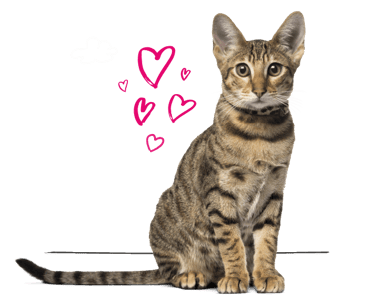
Savannah cat breed guide
Learn all about the striking Savannah cat, from breed facts to behaviour, potential health problems, care needs, costs, and more.
30th July 2026
Savannah cat breed information
Intrigued by the Savannah cat? This guide covers everything you need to know.
Here's what you'll discover:
Size
35-45cm

Lifespan
12-16 years

Weight
Female: 5-8kg
Male: 6-11kg

Temperament
Intelligent, energetic, loyal, curious, confident

Coat Type
Short-haired with a bold spotted coat (brown, silver, black, or smoke)

Possible Health Conditions
Hypertrophic cardiomyopathy (HCM), pyruvate kinase deficiency (PKDef), progressive retinal atrophy (PRA)
Temperament and behaviour
The Savannah cat is known for its high energy, intelligence, and curious nature. Often described as dog-like, they are playful, interactive, and enjoy being involved in everyday life.
They tend to form strong bonds with their owners and are loyal companions, often following them around the home. While affectionate, they’re not usually lap cats and prefer to stay nearby rather than sit still.
Savannahs need plenty of physical and mental stimulation. Interactive play, climbing, and enrichment activities are essential to keep them happy and prevent boredom. Because of their strong hunting instincts and energy levels, the Savannah cat is best suited to experienced owners who can meet their needs for attention and activity.
Savannah cat health issues
Savannah cats are generally healthy, but like all breeds, they can be prone to certain health conditions.
Based on our 2025 claims data and vet cost averages, here are the top three conditions claimed for by Savannah cat owners:
- Vomiting and diarrhoea – with an average claim of £873
- Anorexia – with an average claim of £2,707
- Abdominal tumour – with an average claim of £2,208
Don’t worry, not every cat will experience these issues. To reduce the risk, make sure you choose a reputable breeder, keep up with routine vet check-ups, and support your cat’s overall wellbeing.
Pyruvate kinase deficiency (PDKef) is a genetic condition that affects red blood cells, leading to anaemia. Signs may include weakness, tiredness, weight loss, or pale gums.
Diagnosis is usually made through genetic testing or blood tests that assess red blood cell function. Research has identified this condition across several cat breeds, including Savannah cats, which is why screening is often recommended by responsible breeders.
Progressive retinal atrophy (PRA) is a genetic eye condition that leads to gradual vision loss over time.
Early signs may include night blindness or difficulty navigating in low light. Diagnosis is typically confirmed through eye examinations carried out by a vet, sometimes alongside genetic testing.
While there is no cure, many cats adapt well to vision loss with the right support.
Hypertrophic cardiomyopathy (HCM) is a heart condition that causes the walls of the heart to thicken, affecting how efficiently it pumps blood. It is the most common heart condition in many cat breeds, including Savannahs.
Symptoms can include lethargy, difficulty breathing, or reduced activity, although some cats show no signs early on. Diagnosis typically involves imaging such as an ultrasound scan (echocardiogram), which allows vets to assess heart structure and function.
While there’s no cure, it can often be managed with medication and regular monitoring to support your cat’s quality of life.
Cystitis is a condition that causes inflammation of the bladder and can affect Savannah cats, as well as many other breeds.
Common signs include frequent urination, straining, passing small amounts of urine, or signs of discomfort when using the litter tray. Some cats may also urinate outside the litter tray.
Diagnosis usually involves a physical examination, along with urine tests to check for infection, inflammation, or crystals. In some cases, additional tests such as blood work or imaging may be needed to rule out underlying causes.
Treatment depends on the cause but may include medication, dietary changes, and encouraging increased water intake to support urinary health.
What are the average costs of keeping a Savannah cat?
Savannah cats are one of the more expensive breeds to buy, with prices typically starting from around £800 and reaching £10,000 or more depending on their generation, breeder, and pedigree.
Maintenance and care costs can also be higher than average due to their size, energy levels, and need for enrichment. These may include high-quality food, routine veterinary care, vaccinations, parasite prevention, and toys or climbing equipment to keep them stimulated.
Costs can add up quickly, especially as the average cost of keeping a cat in the UK is around £1,500 per year, which can add up to around £13,000–£16,500 over their lifetime.
If your feline friend gets ill, vet fees can add to these costs, which is why many owners of Savannah cats take out pet insurance to manage any unexpected bills.
Grooming
Savannah cats have short, low-maintenance coats that generally only require weekly brushing to remove loose hair and keep their coat in good condition.
It’s still important to check their ears regularly for signs of wax buildup or irritation, keep their claws trimmed, and maintain good dental hygiene. Introducing grooming routines from a young age can help your cat become more comfortable with handling.
Exercise
Savannah cats are extremely active and need plenty of daily exercise. They enjoy running, jumping, and climbing, and are known for their impressive agility.
Interactive play is essential, with toys like feather wands or balls helping to keep them engaged. Providing tall cat trees, shelves, or climbing structures can help them safely burn off energy and satisfy their natural instincts.
Enrichment
The savannah cat is highly intelligent and needs regular mental stimulation. Puzzle feeders, interactive toys, and training activities can help keep their minds engaged.
They thrive on interaction and can become bored quickly without enough stimulation. Rotating toys and introducing new challenges can help prevent unwanted behaviours and keep them entertained.
Diet
A high-quality, protein-rich diet is important to support the savannah cat’s energy levels and overall health.
Because they are so active, maintaining the right balance of nutrition is key. Feeding consistent portion sizes and monitoring their weight can help keep them in good condition. Always speak to your vet for advice tailored to your cat’s age, size, and lifestyle.
Origins of the Savannah cat
The Savannah cat is a hybrid breed created by crossing a domestic cat with an African serval. The breed first originated in the United States in the 1980s, with the goal of combining a wild appearance with a more manageable domestic temperament.
Savannah cats are often classified by generation (F1, F2, F3, F4, F5, etc.), which refers to how closely related they are to their serval ancestor.* Earlier generations tend to be larger and more energetic, while later generations are generally more suited to domestic life.
- F1 (first generation serval cat): Considered an exotic animal, with one serval parent and one domestic cat parent. A licence is needed to own an F1 Savannah cat in the UK*.
- F2 (second generation serval cat): Has one serval grandparent.
- F3 (third generation serval cat): Mostly bred from domestic cats, but does have a serval great-grandparent.
- F4, F5+ (fourth generation serval cat and beyond): More domestic-like temperaments and closer to standard cat sizes.
The breed was officially recognised by The International Cat Association (TICA) in 2001 and has since grown in popularity due to its distinctive look and personality.
*In the UK, ownership of a first generation Savannah cat (F1) requires a licence, as they are considered closer to their wild ancestors. Owning an F1 Savannah cat without a licence is illegal.
You can read more information about the UK government's current stance on the Savannah cat here.
Did you know?
Savannah cats are one of the tallest domestic cat breeds. In fact, the world’s tallest living domestic cat, Fenrir, is a Savannah cat measuring over 47cm tall!
An intelligent and engaging companion
The Savannah cat is an intelligent, curious, and interactive breed that thrives on attention and activity. They often form strong bonds with their owners and enjoy being involved in daily life, making them a great choice for those looking for a playful and engaging feline friend.
A breed with unique needs
Savannah cats are highly active and require significant mental and physical stimulation. Their hybrid background means they can have strong instincts, including a high prey drive and a need for space and enrichment. Without the right environment and attention, they may become bored or develop unwanted behaviours.
Best suited to experienced owners
The Savannah cat is best suited to experienced owners who can provide time, space, and regular interaction. If you’re prepared to meet their needs and create a stimulating home environment, they can be a loyal and rewarding addition to your household.
Savannah cat FAQs
Savannah cats can make good family pets for the right household. They’re loyal, playful, and enjoy being around people, but their high energy levels and strong personalities mean they’re best suited to experienced owners.
With early socialisation, they can get along well with children and other pets, although their active and sometimes boisterous nature may not suit every home.
Savannah cats are not naturally aggressive, but they are a hybrid breed with ancestry linked to the African serval. This means they can have strong instincts, including high energy levels, curiosity, and a natural hunting drive.
These traits can sometimes be mistaken for aggression, particularly if a Savannah cat is bored, under-stimulated, or not properly socialised. In reality, most are friendly, confident, and form strong bonds with their owners.
With the right environment, early socialisation, and plenty of enrichment, Savannah cats are typically well-adjusted companions. However, their behaviour can be more demanding than other breeds, so they are best suited to experienced owners who understand their needs.
Owning a Savannah cat is a personal choice, but it’s important to understand the responsibilities involved. As a hybrid breed, they can have more complex behavioural and welfare needs than many other cats, including a high need for stimulation and space.
Responsible ownership means researching the breed, ensuring you can meet their needs, and choosing a reputable breeder or considering adoption.
A Savannah cat’s generation (such as F1, F2, or F3) refers to how closely they are related to their wild serval ancestor. This information should be provided by the breeder and confirmed through official registration documents, such as those from TICA.
If you’re unsure, a reputable breeder or vet may be able to help you understand your cat’s lineage.
Similar cat breeds:
- Bengal – Both breeds are very intelligent and energetic, with an exotic 'wild cat' look thanks to their coats.
- Abyssinian – Full of energy and always wanting to play, they share each other's curious nature.
- Siamese – While they are different physically, these two breeds are both very vocal.
Related articles:
Cat insurance
Cat insurance can help cover the cost of veterinary treatment from as young as 4 weeks old.
Refer a friend
Get your friends involved and you’ll both get a £40 voucher! T&C's apply

Treats for you, and your furry friends
At Animal Friends, you have access to exclusive discounts and offers through your online account!