
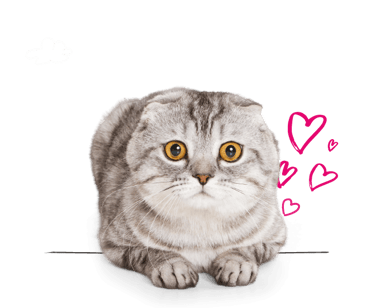
Scottish Fold cat breed guide
Learn all about the beloved Scottish Fold cat, from breed facts to behaviour, potential health problems, care needs, costs, and more.
21st July 2026
Scottish Fold cat breed information
Want to learn more about the Scottish Fold? Find out everything you need to know in this extensive breed guide.
Here's what you'll discover:
Size
Female: 35-41cm
Male: 38-46cm

Lifespan
11-15 years

Weight
Female: 2.7-4kg
Male: 4-6kg

Temperament
Affectionate, docile, curious, social

Coat Type
Scottish Folds have a dense, plush coat that can be either short and soft or slightly longer and silky, giving them a rounded, teddy bear-like appearance

Possible Health Conditions
Early onset arthritis, osteochondrodysplasia, hypertrophic cardiomyopathy, polycystic kidney disease
Temperament and behaviour
Scottish Folds are sweet-natured feline friends who bring a gentle sense of calm and curiosity to the home.
Known for their placid personalities, Scottish Folds often enjoy being close to their people without being too demanding. They may follow you from room to room, settle nearby while you’re busy, or quietly watch the world with their wide, owl-like eyes.
These sociable cats can form strong bonds with their families and may suit homes with children or other pets, thanks to their patient and adaptable nature. You might even spot them sitting in their famous “Buddha position” – resting back on their haunches with their paws on their belly!
Although they’ll usually enjoy gentle playtime or a puzzle toy to keep their clever minds busy, Scottish Folds tend to be fairly low-energy cats who appreciate comfort, routine, and companionship. They’re not usually very vocal either, often choosing soft chirps and purrs over loud meows.
With their affectionate nature and relaxed approach to life, Scottish Folds can make wonderfully calming companions for the right home.
Scottish Fold health problems
Scottish Folds can live long lives, but their unique anatomy can make them more prone to certain health conditions.
Based on our 2025 claims data and average veterinary treatment costs, some of the issues more commonly identified in this breed include:
- Vomiting and diarrhoea – with an average claim of £1,262
- Lameness – with an average claim of £1,219
- Heart murmur – with an average claim of £736
Fortunately, most Scottish Folds won’t experience these issues. To help minimise the risk of any health issues, make sure you choose a trusted breeder, get routine vet care, and look after your cat’s wellbeing.
Hypertrophic cardiomyopathy, or HCM, is a heart condition that can affect cats, including Scottish Folds.
HCM causes the heart muscle to become thicker over time, which can make it harder for the heart to pump blood around the body. In many cases, cats don’t show obvious signs at first, which is why regular vet check-ups are so important.
As HCM progresses, symptoms can include faster or more difficult breathing, tiredness, or sudden weakness in the back legs. Since Scottish Folds are often calm and fairly low-energy, small changes in their behaviour can be easy to miss.
Please contact your vet as soon as possible if you notice anything unusual. While HCM can’t be cured, early diagnosis and the right treatment plan can help support your feline friend’s quality of life.
Early onset arthritis is a condition that Scottish Folds can be more prone to due to the same genetic mutation that causes their folded ears. This mutation affects cartilage throughout the body, including the joints, which can lead to stiffness and discomfort from a young age.
Signs of arthritis may include reluctance to jump or play, stiffness (especially after resting), limping, or changes in grooming habits. You might also notice your cat becoming less active than usual.
While it can’t always be prevented, keeping your cat at a healthy weight, providing joint-supportive nutrition, and attending regular vet check-ups can help manage symptoms and support mobility. Your vet may also recommend supplements or medication if needed.
Osteochondrodysplasia is a genetic condition closely linked to the Scottish Fold breed. It affects the development of cartilage and bone, which is what causes their distinctive folded ears, but it can also impact joints and limbs throughout the body.
Symptoms can vary but often include thickened or shortened limbs, a stiff or abnormal gait, reluctance to move, and signs of pain when handled.
Because this condition is genetic, responsible breeding practices are key to reducing risk. Regular vet check-ups can help spot early signs, and while there’s no cure, pain management, supportive care, and lifestyle adjustments can help keep your feline friend as comfortable as possible.
Polycystic kidney disease (PKD) is a genetic condition that causes fluid-filled cysts to develop in the kidneys, which can gradually affect kidney function over time. This risk comes from historical crossbreeding with other breeds where PKD is more commonly seen.
Symptoms may not appear until later in life but can include increased thirst, frequent urination, weight loss, and reduced appetite. While it can’t be prevented entirely, responsible breeders screen for PKD, and regular vet check-ups can help with early detection and ongoing management to support your cat’s health.
What are the average costs of keeping a Scottish Fold?
Scottish Folds can be expensive to buy and care for, so it’s worth thinking about both the upfront cost and the ongoing commitment before bringing one home.
In the UK, a Scottish Fold kitten usually costs between £800 and £2,000. Kittens from reputable, registered breeders are often at the higher end of this scale, as the price may reflect the care involved in health screening, vaccinations, socialisation, and giving kittens the best possible start.
It’s also important to budget for their long-term care. Annual costs can often range from around £1,500 to £2,500, covering food, routine vet check-ups, insurance, toys, litter, and other essentials.
Although Scottish Folds don’t usually need as much grooming as long-haired breeds, they may need extra support for their joint health. The gene responsible for their folded ears also affects cartilage throughout the body, which means some Scottish Folds can develop osteochondrodysplasia, a condition that may cause stiffness, pain, or mobility problems.
Planning ahead for these costs can help make sure your Scottish Fold gets the care they need to stay as happy, healthy, and comfortable as possible.
Grooming
Scottish Folds are usually fairly low-maintenance when it comes to grooming. Short-haired Scottish Folds often only need brushing once a week to remove loose fur and keep their coat looking soft and healthy.
Their folded ears may need a little extra attention, though. The fold can reduce airflow, so it’s a good idea to check their ears regularly for wax, redness, or irritation. Only clean them if needed, using a vet-recommended ear cleaner, and speak to your vet if you notice any soreness, smell, or discharge.
Exercise
Scottish Folds may be known for their relaxed nature, but they still enjoy gentle play and exploring their home. Interactive toys, feather wands, and short play sessions can help keep them active without putting too much strain on their joints.
Regular movement is especially important for this breed, as it can help support healthy joints and maintain a good range of motion.
Enrichment
Scottish Folds are intelligent, sociable cats who often love being involved in family life. Puzzle feeders, scratching posts, cat trees, and cosy lookout spots can all help keep their minds busy.
They can also be sensitive to changes in routine, so a calm, predictable home environment can help them feel safe and settled.
Diet
Keeping a Scottish Fold at a healthy weight is especially important, as extra weight can put more pressure on their joints and cartilage.
A complete, balanced diet, careful portion control, and regular feeding times can help prevent overeating. Wide, shallow bowls may also make mealtimes more comfortable for some cats. If you’re unsure what or how much to feed your Scottish Fold, your vet can offer advice based on their age, weight, and health.
Origins of the Scottish Fold cat
The Scottish Fold’s story starts on a farm in Tayside, Scotland, where a white barn cat called Susie was found in 1961. Her folded ears gave her a distinctive, owl-like look, caused by a natural genetic mutation.
Susie caught the attention of local shepherd William Ross and his wife, Mary, who began developing the breed in the 1960s. By breeding Susie’s kittens with British Shorthairs and other domestic cats, they helped shape the Scottish Fold we know today.
Although the breed began in Scotland, Scottish Folds became especially popular in the United States during the 1970s. Over time, breeders worked to develop their rounded features, plush coats, and famously folded ears.
Today, Scottish Folds are loved around the world for their gentle nature, expressive faces, and unique appearance. While they’ve come a long way from their farm-cat beginnings, they still carry the sweet, easy-going charm of their ancestor, Susie.
Did you know?
Not all Scottish Fold cats actually have folded ears. Some Scottish Folds keep straight ears for life and are known as “Scottish Straights,” yet they share the same sweet temperament as their folded-ear relatives.
A gentle and sociable companion
Scottish Folds are known for their sweet, calm nature and love of companionship. They often enjoy being near their owners, whether they’re following you around the home or curling up close by. Their relaxed, affectionate personality can make them wonderful feline friends.
Health needs to consider
Scottish Folds are generally easy to groom, but they do have specific health considerations. The gene that causes their folded ears can also affect their cartilage and joints, so they may be prone to stiffness, discomfort, or mobility issues. Regular vet check-ups and careful weight management are important.
Best suited to loving, settled homes
Scottish Folds tend to do well in calm, predictable homes where they can enjoy plenty of company. They may suit families, couples, or individuals who can offer gentle play, cosy resting spots, and a stable routine.
Scottish Fold FAQs
Scottish Folds can make lovely companions for the right home. With their sweet expressions and calm, easy-going nature, they’re often described as “people cats” who enjoy being part of family life. They tend to adapt well to households with children or other pets and are known for their gentle, affectionate personalities.
Scottish Folds are generally low maintenance when it comes to grooming, especially short-haired cats who usually only need a weekly brush. However, their unique genetics mean they may need more regular vet check-ups, careful weight management, and occasional ear care. They’re also very social cats who enjoy company, so they may not suit homes where they’re left alone for long periods.
One of the main considerations with Scottish Folds is their predisposition to osteochondrodysplasia, a condition that affects cartilage and joints. As a result, owners may face higher veterinary costs and need to manage ongoing care. There are also ethical considerations around breeding, so it’s important to research carefully and choose a responsible breeder who prioritises health and welfare.
No, Scottish Folds aren’t hypoallergenic. Like most cats, they produce the Fel d 1 protein, which is a common trigger for allergies. Although they may not shed excessively, they can still spread dander in the home. If you have allergies, it’s a good idea to spend time around the breed first to see how you react.
Yes, Scottish Folds are legal to own in the UK. However, they are not recognised by the Governing Council of the Cat Fancy (GCCF) due to welfare concerns linked to their ear mutation. There is also guidance discouraging breeding because of associated health risks. If you’re considering getting one, it’s especially important to find a responsible breeder who focuses on the cat’s health and wellbeing.
Similar cat breeds:
- British Shorthair – This breed is the genetic foundation of the Scottish Fold, with compact bodies and plush coats.
- Ragdoll – Both breeds are known for their affectionate nature and love a cuddle with their owners.
- Russian Blue – Despite their different appearance, this breed is similarly loyal and devoted.
Related articles:
Cat insurance
Cat insurance can help cover the cost of veterinary treatment from as young as 4 weeks old.
Refer a friend
Get your friends involved and you’ll both get a £40 voucher! T&C's apply

Treats for you, and your furry friends
At Animal Friends, you have access to exclusive discounts and offers through your online account!