7th October 2026
How to toilet train a puppy
Bringing home a puppy means lots of exciting firsts – and probably a few puddles on the floor, too! Toilet training, or house training, takes patience and consistency while your puppy learns where they should go and you learn to recognise when they need to.
The key is to give them plenty of opportunities to go in the right place and reward them when they get it right. Accidents are a normal part of the process, particularly while your puppy is young and still developing better bladder and bowel control.
In this guide, we'll take you through the best ways to toilet train a puppy, including creating a routine, recognising the signs your puppy needs to go, and handling those inevitable little accidents.
New to puppy parenthood? Find out more about what to expect when you get a new puppy.
We’ll cover:
- When should you start toilet training a puppy?
- How to toilet train a puppy step by step
- How often should a puppy go to the toilet?
- Puppy toilet training at night
- What products are best for puppy toilet training?
- How to toilet train a puppy in a flat
- What should you do when your puppy has an accident?
- Puppy toilet training regression
- Puppy toilet training FAQs
When should you start toilet training a puppy?
You can start toilet training your puppy from the moment they come home, which is usually when they’re between 8-12 weeks old. At this stage, your puppy is ready to start learning simple routines and associations, including where you'd like them to go to the toilet.
Take your puppy to their toilet area after they wake up, eat or drink, play or get excited, as well as regularly throughout the day. Being consistent from the beginning can help your puppy learn what's expected of them.
Don't worry if your puppy is older when they come home. Dogs can learn new routines at any age, so you can use the same positive, consistent approach with an older puppy or adult dog. We'll cover this later on in the guide.
One thing to bear in mind is that every puppy develops differently, and it may take some dogs longer to housetrain than others. Our puppy timeline can help you understand some of the other milestones you might encounter throughout their first year and a half.
How to toilet train your puppy step-by-step
Wondering where to start? Try these five steps and you’ll be building your pup’s confidence in no time.
1. Choose a toilet spot
Choose a safe, appropriate place where you'd like your puppy to go to the toilet. If you have a garden, taking them to the same area each time can help keep things consistent. If you live in a flat or don't have access to a garden, choose a suitable outdoor spot nearby or a designated indoor toilet area.
Give your puppy time to sniff and settle first. If your puppy doesn’t go right away, don’t pressure them. Avoid overexciting the puppy or turning a toilet trip into a stimulating game – let them concentrate on the task.
2. Take your puppy out regularly
Young puppies need plenty of opportunities to go to the toilet throughout the day. It can be helpful to follow a toilet training schedule while you adapt to your pup’s routine.
Try taking them out:
- First thing in the morning
- After waking from a nap
- After eating or drinking
- After playing or exercising
- After something exciting happens
- Before and after being left alone
- Last thing before bed
- Whenever they show signs they need to go
This may seem like a lot at first, but as your puppy gets older, they should gradually be able to go for longer between toilet trips.
3. Learn the signs your puppy needs to go
Getting familiar with your puppy's body language is one of the most useful toilet training tips, as it can help you predict their needs and get them to their toilet area before any accidents.
Signs a dog needs the toilet may include:
- Sniffing the floor
- Circling
- Becoming restless
- Wandering towards the door
- Whining or behaving differently
- Starting to squat
As soon as you notice a sign, calmly take your puppy to their toilet area.
You don't have to watch them every second of the day – if they're fast asleep beside you, you can relax! But once they wake up, start playing or finish a meal, it's time to be alert.
As you get to know your puppy, you'll start recognising their individual routine and the little clues that mean a toilet trip is due.
4. Reward your puppy when they get it right
Rewarding your puppy for good behaviour encourages them to keep up the good work.
Praise them and, if appropriate, offer a small training treat immediately after they've finished toileting in the right place. Giving the reward straight away helps your puppy make the connection between what they did and the positive response they received.
5. Introduce a toilet cue
You can also teach your puppy a simple word or phrase that tells them it's time to go.
Choose a short cue, such as “toilet” or “wee-wees”, and use the same one consistently. Say it calmly as your puppy begins toileting, before praising them once they've finished.
You can learn more about using cues and rewards in our guide to training a puppy to respond to commands.
How often should a puppy go to the toilet?
Young puppies need to go to the toilet frequently because they're still developing bladder control. While every puppy is different, they'll commonly need a toilet break after waking, eating, drinking, or playing, as well as regularly throughout the day.
Rather than worrying about an exact number of wees or poos, get to know what's normal for your puppy.
When should I worry about my puppy's toilet habits?
Puppies have weaker bladders and more sensitive stomachs, especially because they’re always learning and are more at risk of eating something they shouldn’t.
An occasional upset stomach or diarrhoea is fairly common in puppies, but you should speak to your vet if there is any change to their consistent toilet routine.
Seek immediate veterinary attention if your puppy suddenly starts toileting much more or less than usual, is straining, has blood in their wee or poo, seems uncomfortable while toileting, or appears unwell.
Puppy toilet training at night
Night-time potty training can be one of the more challenging parts of welcoming a new puppy home. Young puppies may not yet be able to make it through the entire night without needing the toilet.
It takes time to build a night-time routine that works for you and your puppy, but these tips can help them settle:
- Keep evening mealtimes consistent and avoid feeding a large meal or lots of treats close to bedtime
- Give your puppy a final opportunity to go to the toilet shortly before you go to bed
- Keep the evening calm and avoid energetic play immediately before bedtime
- Create a comfortable sleeping space where your puppy can feel safe and settled
- If your puppy does wake for a toilet break, keep things quiet and low-key before settling them back to sleep
Remember that crying or restlessness doesn't always mean your puppy needs the toilet. They may also be adjusting to sleeping away from their mum and littermates and need some reassurance. If your pup is struggling, you can find more advice in our guide to managing separation anxiety in dogs.
What products are best for puppy toilet training?
You don't need lots of specialist equipment to successfully toilet train your puppy, but there are a few products that can make the process a little easier:
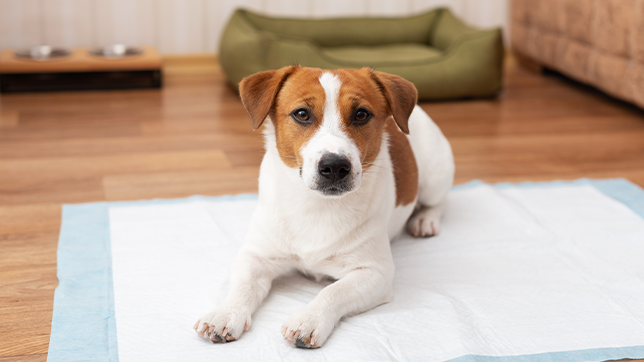
- Puppy pads: Absorbent pads can help protect your floors and provide a designated indoor toilet area, particularly when getting outside quickly isn't practical. Remember that if your goal is outdoor toileting, you'll eventually need to transition your puppy away from them.
- Indoor grass or turf trays: These provide a clearly defined toilet area with a grass-like surface, which can be particularly useful for puppies living in flats or homes without easy access to a garden.
- Toilet training bells: These can be hung near a door and used to teach your puppy a way to let you know they want to go outside. Like any new cue, they'll need to learn what ringing the bell means through consistent training.
- Enzymatic or pet-safe cleaners: Cleaning products designed for pet mess can help thoroughly clean the area and remove lingering smells that might encourage your puppy to return to the same spot.
- Toilet training sprays: Attractant sprays are designed to encourage puppies to toilet in a particular place, such as on a puppy pad or in a designated outdoor spot. Results can vary, so think of them as an optional extra rather than a replacement for consistent training.
Important: Always check that a product is suitable for puppies, follow the instructions carefully and never spray it directly onto your puppy.
How to toilet train a puppy in a flat
Toilet training a puppy in a flat or apartment requires a little more planning, but the same principles still apply. If you'd like your puppy to learn to toilet outside:
- Choose a safe, appropriate toilet spot close to your building
- Offer regular trips rather than waiting until they're desperate
- Learn the early signs that they need to go, so you have enough time to get outside
- Keep your toilet location as consistent as possible
- Have everything you need – like your keys, shoes, and lead – ready to go by the door, so you can get outside quickly
If getting outside isn't always practical, you could create a temporary designated toilet area in an easy-to-clean part of your flat. Using a clearly defined tray with a surface similar to where you'd eventually like your puppy to toilet outside, such as turf, can help distinguish their toilet area from the rest of your home.
The important thing here is to make the routine predictable and give your puppy plenty of opportunities to succeed.
What should you do when your puppy has an accident?
Accidents happen. Your puppy is learning a completely new skill and won't always get it right. Most importantly, never punish your puppy for making a mistake. This includes yelling at them after an accident and pushing their nose into their mess.
Punishment doesn't show your puppy where you'd actually like them to go and could make toilet training more stressful for them.
If you spot your puppy preparing to toilet indoors, calmly and encouragingly take them to the right place. If you find an accident afterwards, simply clean it up and focus on giving them another opportunity to succeed next time.
Learn more about how to train your dog with positive reinforcement.
Why has my puppy started having accidents again?
If a puppy who seemed to be making great progress suddenly starts having accidents, they may be experiencing toilet training regression.
It doesn't necessarily mean they've forgotten everything they've learned. Changes in routine or environment, distractions, reduced supervision or increasing the time between toilet trips too quickly could all contribute to setbacks.
If accidents start happening again:
- Go back to offering more frequent toilet trips
- Supervise your puppy more closely
- Reward them when they toilet in the right place
- Keep their routine as predictable as possible
- Stay patient and avoid punishment
Sudden changes in toilet habits can sometimes have a medical cause, too. If the regression is unexplained or your puppy is toileting much more frequently, straining, experiencing diarrhoea, seems uncomfortable, or otherwise appears unwell, contact your vet.
Key takeaways
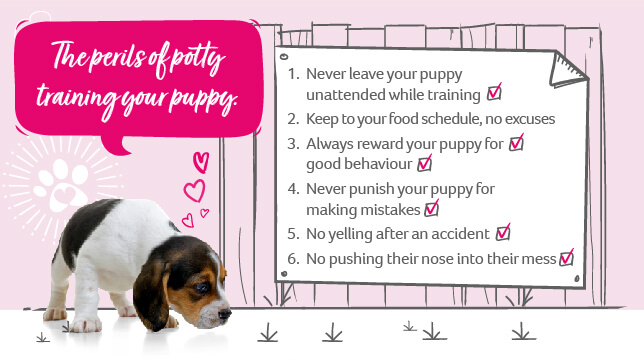
Successful toilet training comes down to routine, supervision, positive reinforcement and plenty of patience.
Give your puppy frequent opportunities to toilet in the correct place, learn their signals and praise them when they get it right. Accidents will happen, but calmly cleaning them up and sticking to your routine will help your puppy understand what's expected.
Toilet training is just one part of helping your new best fur-iend settle into family life.
Visit our puppy advice hub for more support, including advice on socialising your puppy and training your puppy to respond to commands.
While your puppy is busy exploring their new world, you might also be thinking about protecting them if they become ill or injured. Learn more about puppy insurance.
Puppy toilet training FAQs
There's no single timeframe for puppy toilet training, as every dog learns at their own pace. That said, it can range from anywhere between a few days to a few weeks or months. Factors like their age, previous experiences, and how consistent their routine is can all make a difference.
Remembering that the process is rarely linear can be helpful, especially if your puppy doesn’t get it right every time or seems to be regressing. However, if you’ve stuck to a strict routine and it’s been more than a few months without your pup’s habits improving overall, consider reaching out to a vet or behavioural specialist for support.
Give your puppy plenty of opportunities to toilet in the right place, especially after waking, eating, drinking, and playing. Keep an eye out for signs they need to go and praise or reward them when they get it right.
If accidents keep happening, try offering more frequent toilet breaks and supervising your puppy more closely.
There's no single puppy breed that's guaranteed to be the most difficult to toilet train. Every puppy is different, and factors such as their age, temperament, previous experiences, and training routine can all influence how quickly they learn.
Rather than comparing your puppy with other breeds, focus on keeping their training positive and consistent.
There's no breed that's guaranteed to be the easiest to toilet train. Some dogs may pick up new routines more quickly than others, but individual temperament, previous training, and consistency can all play a part.
There's no clear rule that male or female dogs are easier to toilet train. Your dog's age, personality, previous experiences, and training routine are likely to be more useful things to consider than whether they're male or female.
If your dog seems “stubborn”, try going back to basics rather than assuming they're deliberately refusing to learn. Offer more frequent toilet breaks, supervise them closely, stick to a consistent routine, and reward them as soon as they toilet in the right place.
If they're struggling despite consistent training, or a previously toilet-trained dog suddenly starts having accidents, speak to your vet or a behavioural specialist.
Yes! If you're wondering how to toilet train a dog who's past the puppy stage, many of the same principles still apply. Give them regular opportunities to toilet in the right place, supervise them indoors, follow a consistent routine, and reward them when they get it right.
Older dogs may have previous habits or experiences to work through, so give them plenty of time and patience. If a previously toilet-trained adult dog suddenly starts having accidents indoors, contact your vet, as there could be an underlying health issue.

Need insurance for your puppy?
Dog insurance can help cover the cost of veterinary treatment from as young as 4 weeks old.

Free vet consultations with Joii
Our award winning dog insurance also comes with free access to Joii, with unlimited, 24/7 access to video vet calls with RCVS registered practitioners plus their symptom checker tool for immediate, qualified advice on 160 common conditions.