
Bombay cat breed guide
Learn all about the sleek and sociable Bombay cat, from breed facts and temperament to health considerations, care needs, costs, and more.
30th July 2026
Bombay cat breed information
Check out this detailed guide about the Bombay cat, so you can learn more about this popular breed.
Here's what you'll discover:

Size
23–36cm

Lifespan
12-16 years

Weight
Female: 2.5-4.5kg
Male: 3.5-5.5kg

Temperament
Affectionate, playful, intelligent, social

Coat Type
Short, sleek, glossy black coat

Possible Health Conditions
Hypertrophic cardiomyopathy (HCM), dental disease, respiratory/sinus issues, hypokalaemic myopathy
Temperament and behaviour
Bombay cats are known for their affectionate, people-focused personalities. Typically described as confident, playful, and sociable, the temperament of a Bombay cat makes this breed a popular choice for owners looking for a loyal feline companion.
Many Bombays enjoy being close to their owners and may follow family members around the home - often called “velcro cats” because of these tendencies. They’re fond of laps, warm spots, and plenty of attention, so they may not suit households where they’ll be left alone for long periods.
Bombays are also intelligent and active. They usually enjoy interactive toys, climbing spaces, puzzle feeders, and games such as fetch. Their playful nature can continue into adulthood, although some may become more relaxed as they get older. Some Bombays are also known for being quite vocal and communicative, often using soft meows or purrs to interact with their owners.
With the right introductions, Bombays can get along well with children, cat-friendly dogs, and other pets. However, some may prefer to be the centre of attention, so slow introductions and separate resources are important in homes with multiple pets.
Bombay cat health issues
Bombays are generally considered a healthy breed, but like all cats, they can be prone to certain health conditions. Some of these risks may be linked to their Burmese ancestry.
Based on our 2025 claims data and vet cost averages, here are the top three conditions claimed for by Bombay cat owners:
- Hyperthyroidism – with an average claim of £1,008
- Lethargy – with an average claim of £493
- Urinary tract infection – with an average claim of £370
Please remember that while certain health conditions may be seen more often in the Bombay cat, every cat is unique and may never experience any of these issues.
Understanding what to look out for can help you support your cat’s wellbeing and seek veterinary advice early if needed.
Hypertrophic cardiomyopathy, or HCM, is one of the most common heart diseases seen in cats, including Bombays. The condition causes the walls of the heart to thicken, which can affect how well the heart pumps blood.
Some cats show no obvious symptoms, while others may experience lethargy, rapid breathing, difficulty breathing, or reduced interest in exercise. Although HCM can’t be cured, vets may recommend medication and regular monitoring to help manage the condition.
Hypokalaemic polymyopathy is a genetic condition that can affect some Bombay cats, particularly due to their Burmese ancestry. It causes low potassium levels, which may lead to muscle weakness, stiffness, or difficulty holding the head in a normal position.
Research has identified a specific genetic mutation linked to this condition in Burmese and closely related breeds, including Bombays, which can help vets diagnose affected cats and support responsible breeding practices.
Treatment can involve potassium supplementation, and with appropriate care, many affected cats can go on to live a good quality of life.
Some Bombay cats may be slightly more prone to sinus or breathing-related issues due to their Burmese ancestry and facial structure. Signs to look out for can include noisy breathing, nasal discharge, excessive tearing, or reduced tolerance for activity.
These symptoms are not seen in all cats and can vary between individuals, but it’s still important to monitor any ongoing changes in your cat’s breathing or eye health. If you notice breathing changes, eye discharge, or ongoing snuffling, it’s best to speak to your vet.
Dental disease can affect many cats, including Bombays. Plaque and tartar build-up can lead to gum inflammation, discomfort, bad breath, and difficulty eating. Over time, untreated dental issues can progress and may affect your cat’s overall health, so early care is important.
Regular dental check-ups, tooth brushing where possible, and vet-recommended dental care can help support your Bombay’s oral health.
What are the average costs of keeping a Bombay cat?
The initial price of a Bombay cat can vary depending on breeder, pedigree, age, and location. In the UK, prices for a Bombay kitten typically range from around £600 to £1,500.
Beyond the initial cost, you’ll also need to budget for food, litter, grooming tools, toys, routine vaccinations, parasite treatments, dental care, and vet check-ups. On average, cat ownership can cost around £1,500 per year, and can add up to roughly £13,000 to £16,500 over their lifetime.
Many owners also choose to insure their Bombay cat to help cover the costs of any accidents or illnesses, providing peace of mind throughout their cat’s life.
Grooming
Bombay cats have short, glossy coats that are naturally low-shedding and fairly low maintenance. Weekly brushing should usually be enough to remove loose hair and keep their coat looking sleek. You’ll also need to trim their nails regularly and keep an eye on their teeth and gums, as dental issues can affect this breed.
Exercise
Bombays are playful, active cats who benefit from daily exercise. Wand toys, climbing trees, puzzle feeders, and games like fetch can help keep them moving. Because some Bombays can gain weight as they get older, regular play is important.
Enrichment
Bombays are intelligent and social, so they need plenty of mental stimulation. Interactive toys, training games, scratching posts, and window perches can help prevent boredom. They can also learn simple tricks and enjoy games that challenge their problem-solving skills, making enrichment an important part of their daily routine.
Diet
A balanced, high-quality diet will help support your Bombay’s energy levels and overall health. Because they can be food-motivated and may gain weight, portion control is important. If you’re unsure, your vet will be able to advise you on the best food for your cat’s age, weight, and lifestyle.
Origins of the Bombay cat
The Bombay cat was developed in the United States in the 1950s by breeder Nikki Horner, who crossed Burmese cats with black American Shorthairs to create a sleek, panther-like breed.
The name “Bombay” comes from the Indian city of Mumbai, referencing the natural habitat of the black panther that the breed was designed to resemble.
There are two recognised types of Bombay cat: the American Bombay, which is the original breed, and the British Bombay.
In the UK, the British Bombay is not typically recognised as a separate breed, but instead forms part of the Asian cat group (often referred to as the Asian Self). This type developed from European Burmese and other short-haired cats, resulting in a similar sleek black appearance but with slightly different breeding origins.
Did you know?
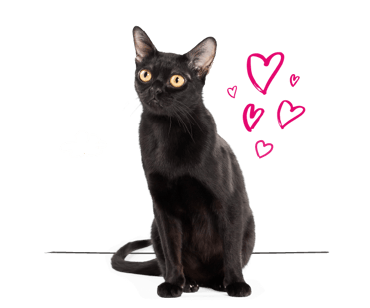
Bombay cats are often nicknamed “mini panthers” or “parlour panthers” thanks to their resemblance to the wild cat with their glossy black coat and striking golden eyes.
A sociable and affectionate cat
Bombays are loving, people-focused cats that enjoy attention and often form strong bonds with their owners. Many like following their humans around the home and curling up on laps.
A breed that needs companionship and stimulation
Bombays are intelligent and playful, so they need regular interaction, toys, and mental stimulation. They may become bored or attention-seeking if left alone too often.
Best suited to attentive, engaged owners
Bombays are often happiest in homes where someone is around for much of the day, or where they’ll have companionship from people or other pets.
Bombay Cat FAQs
Yes, Bombay cats can make excellent family pets due to their affectionate and social nature. They tend to form strong bonds with their owners and often enjoy being involved in day-to-day activities, making them a great choice for families who want an interactive companion.
As with any cat, children should be taught how to handle them gently, and introductions to other pets should be done slowly.
Yes, Bombay cats are considered rare in the UK. Registration data suggests that relatively small numbers of Bombay kittens are bred each year, which can make them harder to find than more popular breeds.
Because of this, it’s important to choose a responsible breeder who carries out appropriate health testing and can answer questions about the kitten’s parents and ancestry.
No, Bombay cats are not related to panthers. They are a domestic breed developed from Burmese and American Shorthair cats.
However, they were intentionally bred to resemble a miniature black panther, which is why they have their distinctive glossy black coat and striking eye colour.
A true Bombay cat usually has a sleek, jet-black coat, black paw pads, a black nose, and bright copper or gold eyes. Their coat should be black all the way to the roots.
However, many cats can look like Bombays without being pedigree Bombays. The only way to know for sure is through breeder documentation or pedigree records.
Similar cat breeds:
- Burmese – Share the same physical features with their sleek, athletic build and dog-like personality.
- British Shorthair – Similarly calm and laid-back with a plush coat, but a little more plump and stockier.
- Savannah – Although very different in appearance, they share the same high-energy, mischievous personality.
Related articles:
Cat insurance
Cat insurance can help cover the cost of veterinary treatment from as young as 4 weeks old.

Refer a friend
Get your friends involved and you’ll both get a £40 voucher! T&C's apply

Treats for you, and your furry friends
At Animal Friends, you have access to exclusive discounts and offers through your online account!